Sharing connects us with other people; it is a form of communication and mutual enrichment, but sometimes we are also oversaturated with shared materials. In what forms does it appear in art? Join us in looking at the theme of sharing through several examples from Slovak and international art. What role does the audience play in the sharing of artworks? How does art change a space shared by the population? How did artists share, and how do they share, their thoughts and ideas?

The suggested discussion questions open up social and civic topics, while simple activity ideas encourage sensitive perception and getting to know the people around us, the space we share, and also ourselves. They can be used in art education, art and cultural history, civics, and media education, or developed in greater depth as part of a long-term project. Don’t forget to share the outcomes and feelings from the individual activities in class!
Sharing with the audience
It is usually forbidden to touch exhibited works, so that they are not damaged or otherwise put at risk and devalued. Some works, however, need touch, cooperation, and sharing with the audience – without these, they would not exist.
At the beginning of the installation/performance by Slovak conceptual artist Roman Ondak, there are empty white walls. The participatory work Measuring the Universe comes into being only through the audience’s intervention. People who decide to share their height, name, and date of visit gradually fill the space in which the work takes place with these entries. Roman Ondak transferred a custom from our homes – measuring and recording the height of growing children – into the gallery environment, thereby connecting everyday life with art. The result is a kind of graphic record: a densely inscribed section of the walls, from which a few entries here and there protrude lower or higher. The people who took part jointly shared the space in the gallery, which is usually intended to be perceived from a distance and, above all, without touch; they also shared personal information with others, ultimately creating a collective artwork.
Do you also have a custom of measuring yourselves at home? Can you still find these marks at home? What can you read from them?
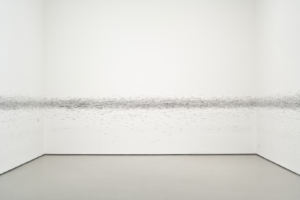
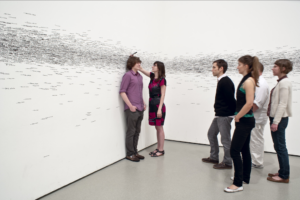
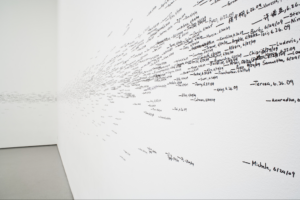
Roman Ondak: Measuring the Universe, 2007. Source: https://www.moma.org/collection/works/128840
The performance by Serbian artist Marina Abramović works with sharing with the audience in a different way. For the duration of her retrospective exhibition at MoMA in New York, the artist sat silently at a table every day during the museum’s opening hours, and anyone from the audience could sit opposite her, likewise without words. The pair – the artist and the viewer – looked at each other, while the audience looked at them. Just as with Roman Ondak’s work, this work would not have come into being without the active participation of people. In the case of Marina Abramović’s work, however, the sharing took place directly in a personal encounter with the artist; it represented an intensely shared, intimate, and exceptional moment. What different emotions might the people involved in the performance have felt?
Why do you think the artist did not choose the form of a conversation with the audience? In what way can such an intense perception of one another be a stronger experience? When was the last time you had time for a wordless conversation with someone close to you?

Marina Abramović: The Artist is Present, 2010. Source: https://www.moma.org/audio/playlist/243/3133
Activity idea: You can share art outside the gallery too! Try it among people you know.
Web umenia is an online catalogue of digitized works of visual art from Slovak and several Czech galleries. It contains almost 180,000 works, with more being added gradually. Try to discover one that best captures your current mood, the activity you are currently engaged in, or what you are thinking about right now. Various filters will help you search for works. You can share the selected work on your social networks or in private groups. Don’t forget to mention the author and the title; you can also add the reason for your choice. Perhaps this will help people you know discover new works, or inspire them to share in a similar way. Which work will you choose today? Spread art into the world!
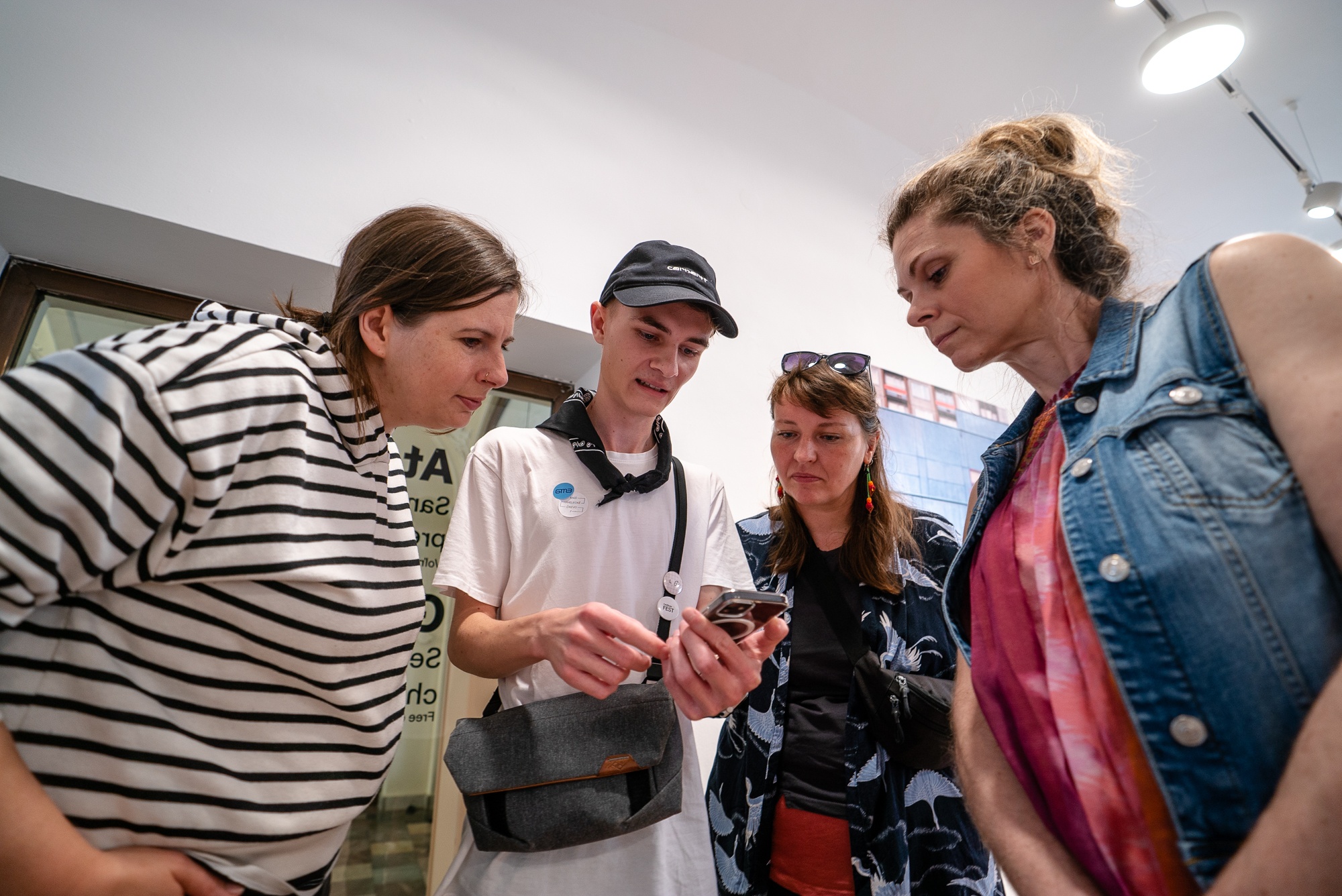
Photo: Šimon Lupták, SNG
Shared space
Public space is a defined area intended for public use and accessible to everyone without distinction. It is a place shared by residents as well as passers-by. What role can art play in it?
The Družba fountain on Námestie slobody in Bratislava had been out of operation and in a state of disrepair for more than 15 years. The square is located in a strategic place in the broader centre of the capital, but for a long time it was only a transit space, not a place where people would spend their free time. In 2023, the fountain, titled Linden Flower , was restored and put back into operation, which significantly changed the character of the entire square. The renovation of the fountain also envisaged active use of the object: people can enter it and cool off on hot days. In the summer months, the square thus turns into one of the busiest and most popular public places in the city, also used for various cultural and social events.
What pleasant place do you know in your surroundings? What makes it special for you?
TIP: If you want to discover more art in the streets of Bratislava, explore the website umeniemesta.sk, where you will find photographs, the exact location and information about works in shared public space. You may find interesting tips for your next walk through the city.
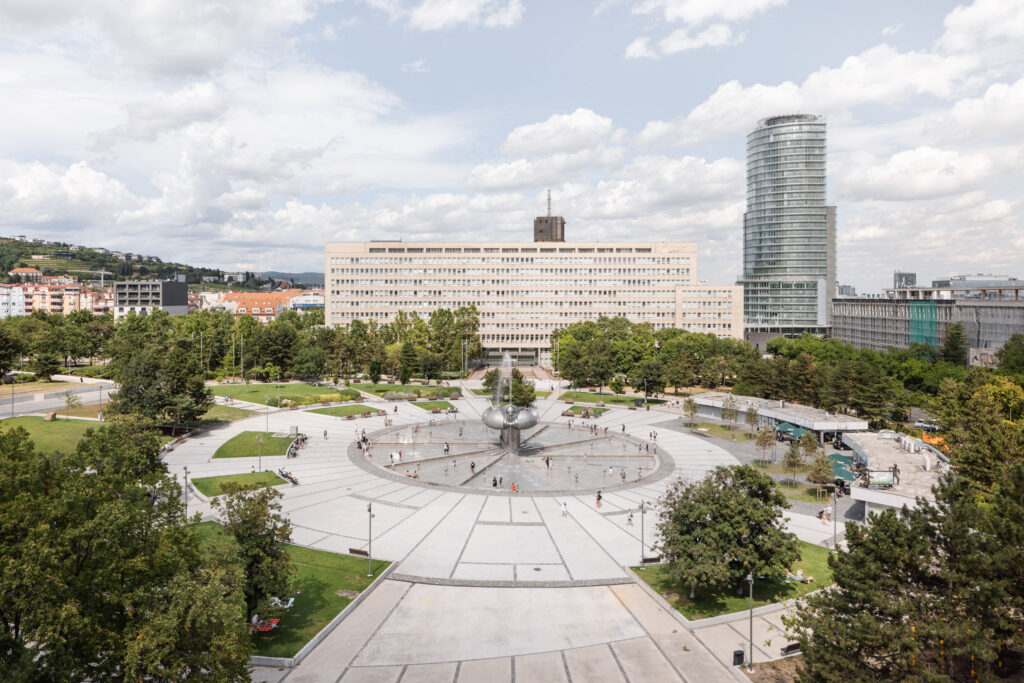
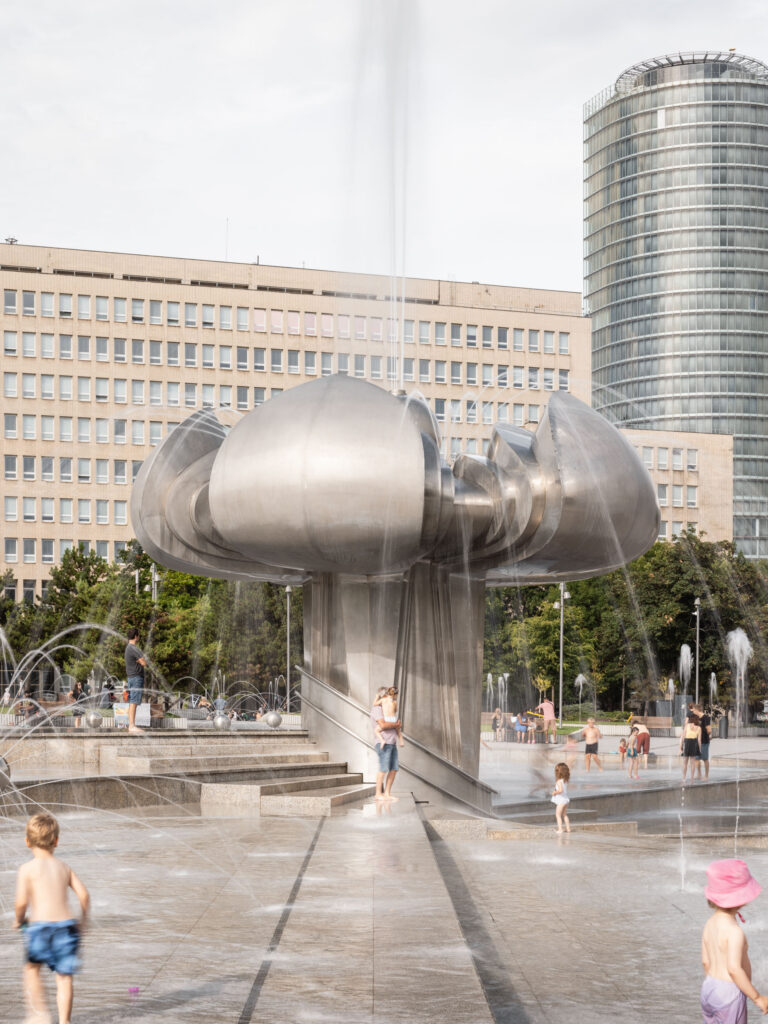
K. Lacko, V. Droppa, J. Hlavica: Družba Fountain – Linden Flower, 1978 – 1980. Photo: Matej Hakár. Source: https://umeniemesta.sk/diela/recOhVZSW5l78wqPB
Art in public space does not have to appear only in the form of fountains, sculptures or memorials. It can also be intangible, fleeting.
Contemporary artist Maja Štefančíková carried out the project Ephemeral Sculptural Group in the centre of Brno. Several performers carrying stone-carving tools stopped in several squares and created a memorial — not from stone or another material, but from their movements and from the sounds made by the individual tools. The sound memorial existed only at the moment the work was being carried out, then it disappeared from the public space again. Passers-by played an important role — they could enter the work at will and thereby change the length of the performance. As the author says, she is always interested in the relationships that arise in a given space, which she sees, hears and feels. Ephemeral Sculptural Group encourages us, among other things, to perceive sensitively, with all our senses, the environment in which we move every day, but it also points out how monuments and memorials disappear from streets and squares and change.
Try to track down a sculpture or memorial from your town that has been removed. Find out what it was connected with and why it disappeared from its place. What or who influences what is found in our streets and squares?
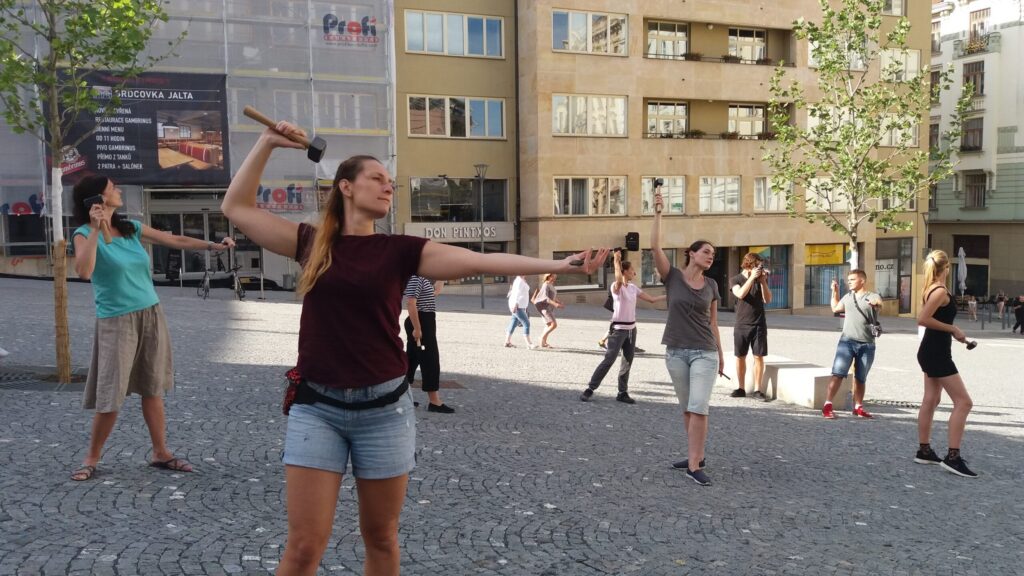
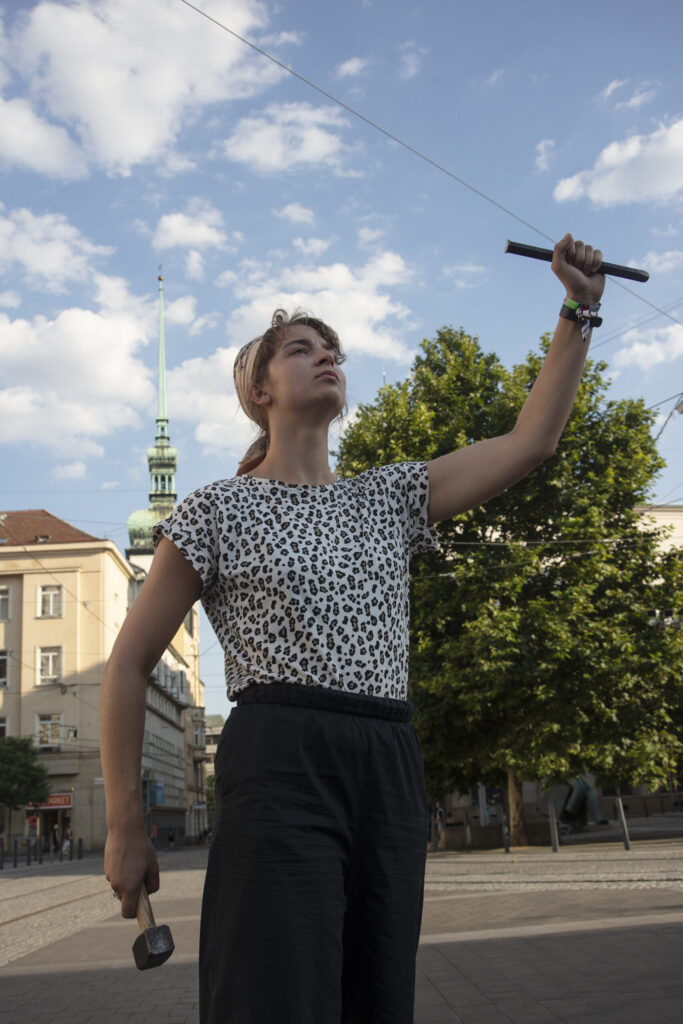
Maja Štefančíková: Ephemeral Sculptural Group, 2019. Photo: Eva Rybářová. Source:https://secondaryarchive.org/artists/maja-stefancikova/
Activity idea: Works in public space are often preceded by research and mapping of the selected locality. Join us in doing it! Ideally, set aside a longer period of time for the research.
Choose a square in your surroundings, stop there on different days of the week, at different times, in different weather. Write down what qualities you think the square should have, and observe to what extent yours fulfils them. You can focus on greenery, the possibility of rest, protection from bad weather, its location… Also observe people and their behaviour — do they spend time in the square? How? You can write down or draw your observations. The collected data can serve for thinking about how the place could be improved. Is there something we can change ourselves? Pick up litter from it or bring it to life by starting to meet your friends there. Public space is alive only when it serves people.
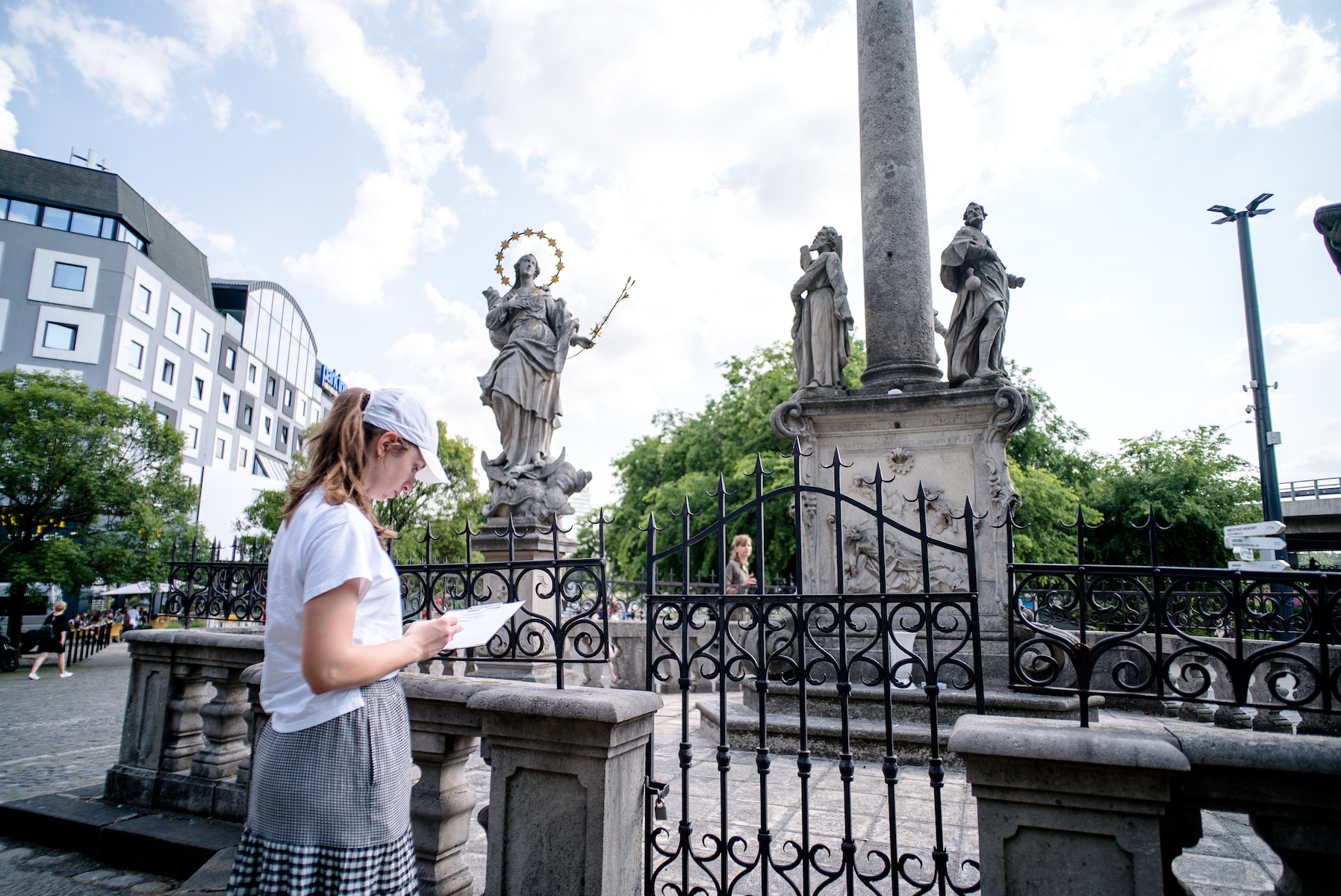
Photo: Šimon Lupták, SNG
Sharing in the community
Artistic-social projects focused on working with people from vulnerable groups often use the motif of sharing.
Memories of various places, stories from childhood or personal confessions, in the project by Czech ceramicist and designer Lenka Záhorková, found themselves drawn or written out on discarded, upcycled porcelain plates. The author worked with senior women who were willing to share their memories and life stories. They processed them in various artistic forms, which the author then digitally transferred onto porcelain. The project supports intergenerational communication, opens topics relatrelated to aging and, last but not least, also has a strong therapeutic character.
Porcelain tableware is often passed down from generation to generation, especially pieces intended for festive occasions. Do you have any similar family heirloom at home? Do you know its story? Does it bear traces of the memory of its previous owners?a0
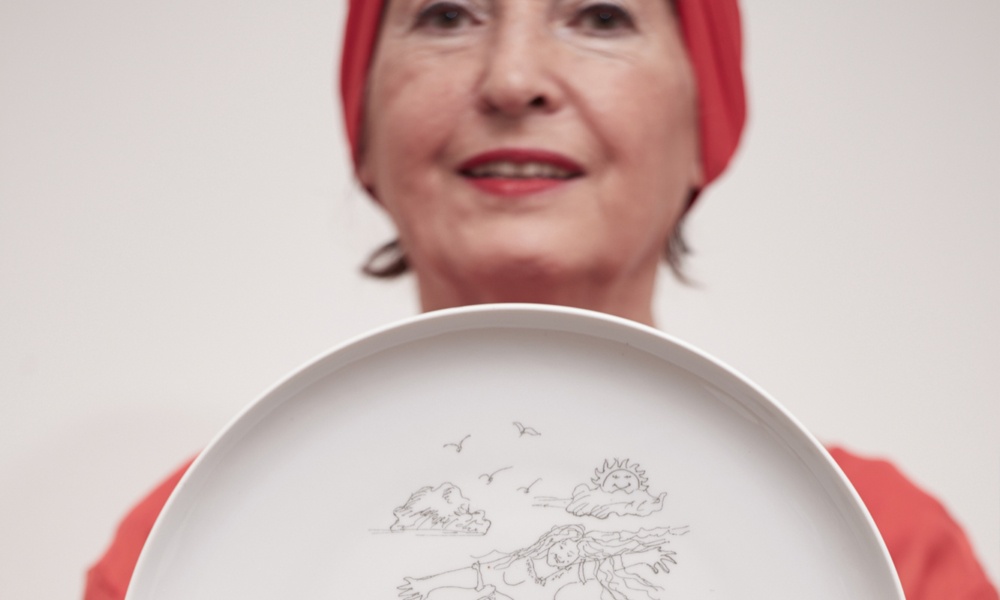

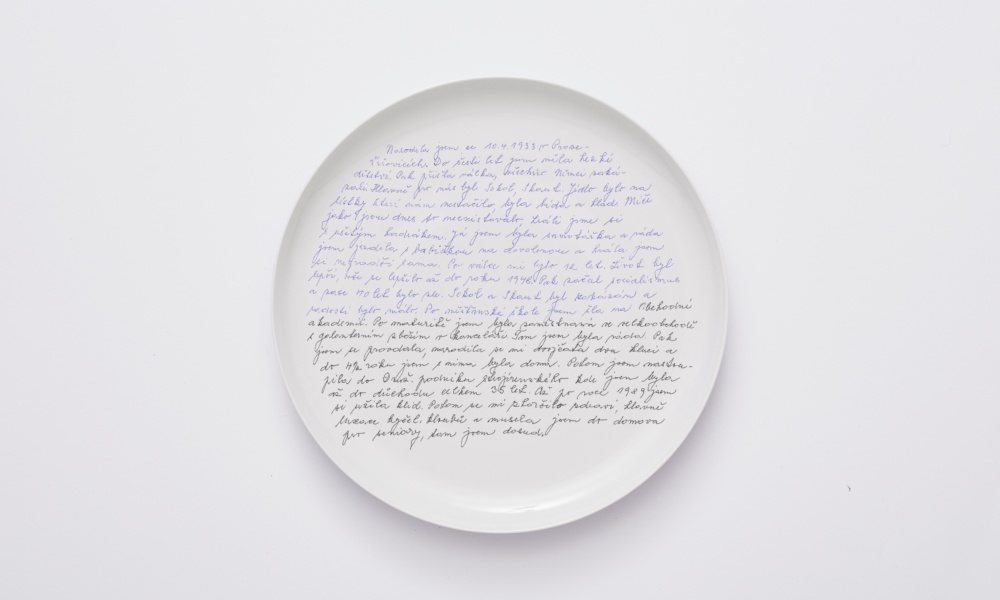
Lenka Záhorková: Tak to bylo, 2019. Photo: Michal Ureš. Source: http://www.zahorkovalenka.com/prace/domu/
The activities of contemporary artist Tomáš Rafa connect art and civic activism. As part of the project Sports Walls, he and a small team visited Roma settlements on the outskirts of which segregation walls had been built. Rafa used these as a free surface for an artistic realization in which he involved the local population, adults and children alike. They shared not only the space of the wall, but also time spent in a joint creative activity. A wall built with the aim of making it as difficult as possible for the settlement’s inhabitants to share common space with the neighborhood was transformed, through Rafa’s participatory activity, into a place of shared activity for the whole community.a0Curator Lenka Kukurová writes: “Tomáš Rafa’s works touch on political events that provoke public discussion, in which the author himself takes part – as both an artist and an activist. Ethics plays the same role in his work as aesthetics.”
What themes can works like these open up? Do you think it is necessary to hold a public discussion about them? What role does sharing play in them?
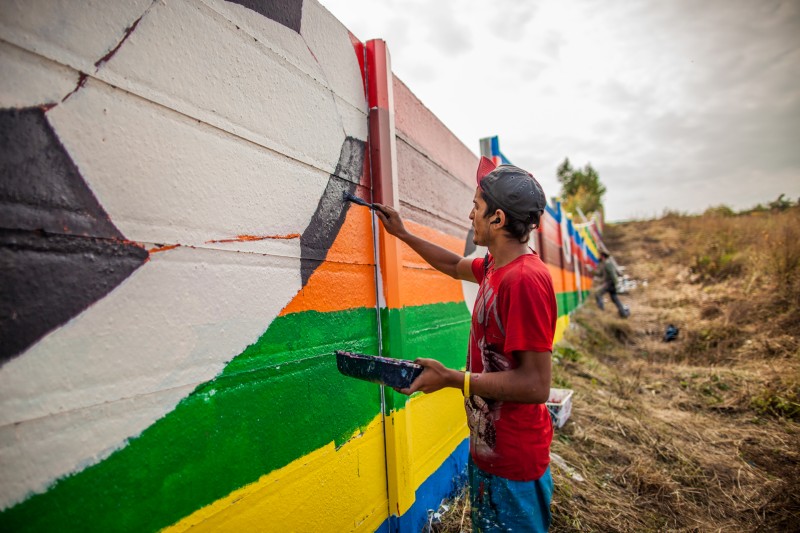

Tomáš Rafa: Sports Walls, 2012. Sources: https://artaktivista.sk/painting-workshop-in-ostrovany-2012/#gallery/18840477369ab444af92f8b019a54bf1/1498 https://artaktivista.sk/painting-workshop-in-ostrovany-2012/#gallery/18840477369ab444af92f8b019a54bf1/1506
Activity idea: Try therapeutic sharing and remembering through a joint drawing in a safe environment. The activity can be done in pairs or in a larger group.
Reach out to parents, grandparents, or loved ones with whom you are not often in contact, but with whom you share memories and experiences. Prepare paper and colored pencils or markers – one color per person. Suggest a specific shared experience, or arrive at one through conversation. As you talk about it, take turns drawing the individual elements of your experience. Be sensitive and attentive, not only in the conversation but also in the drawing – try to build on the previous steps or develop them further with your drawing. Sharing means that in the space of the paper and the conversation you are not alone – you share it with those you have approached. Did anything in the conversation or drawing surprise you? Did you gain a new perspective on the shared experience? And most importantly, did you enjoy a shared moment together?

Photo: Šimon Lupták, SNG
Personal sharing
In the past especially, a sketchbook was a common part of the equipment of male and female artists; it represented a storehouse of ideas and inspirations that were often further developed in the studio. For us, it represents a unique source of information about the author’s thinking and artistic thought. All the more so if the sketches are supplemented with text. Or if we have an entire diary at our disposal.
“I noticed a strange color in the sky: above it was dark blue, lower down it played into greenish tones and ended on the horizon in a transparent, warm violet.” This is how Ladislav Mednyánszky recorded his observation of the sky from a morning walk in his diary in May 1881. The preserved diary entries, letters to family and friends, and numerous sketches provide a valuable “insight” into the inner life of this important Hungarian painter. Thanks to their publication in book form, they are accessible to the general public. In the preface to the second edition, curator Katarína Beňová writes that these entries “are not only testimony to the author’s rich world of thought, records of his travel adventures, and philosophical reflections, but also include very simple, even utilitarian reports from daily life.” Reading his entries can inspire us to observe the landscape around us more sensitively and perhaps even to write our own diary.
Did you know that in the Slovak National Gallery in Bratislava you can also find the Fine Art Archive, a specialized archive primarily dedicated to the estates of male and female artists? Various textual, photographic, and also artistic materials are stored here. Among other things, Ladislav Mednyánszky’s diary is here too.a0
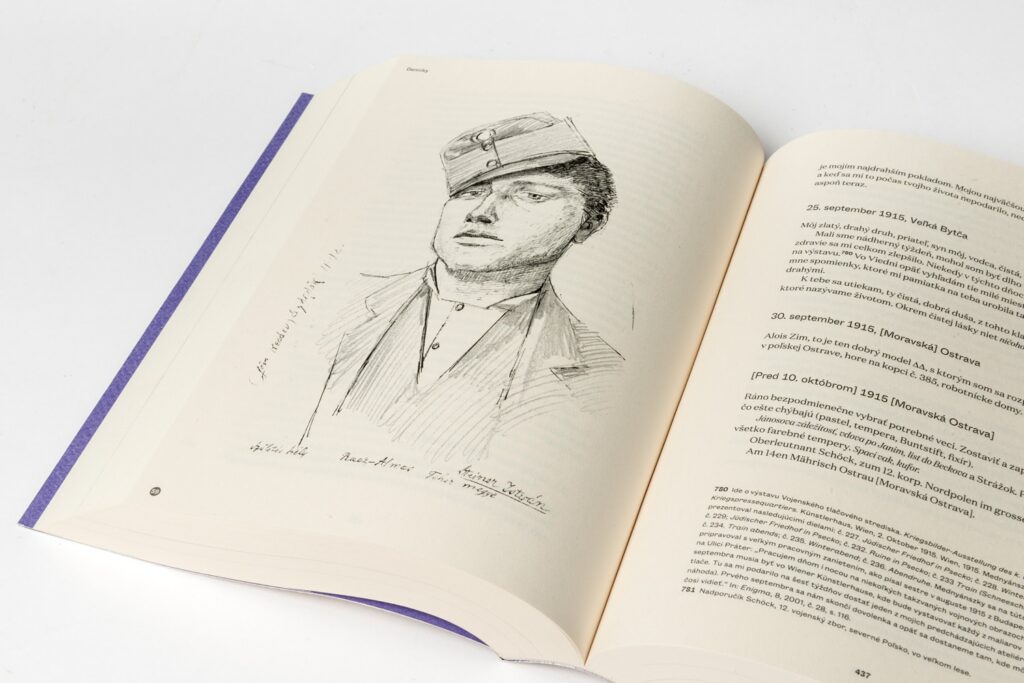
Photo: Martin Deko, SNG
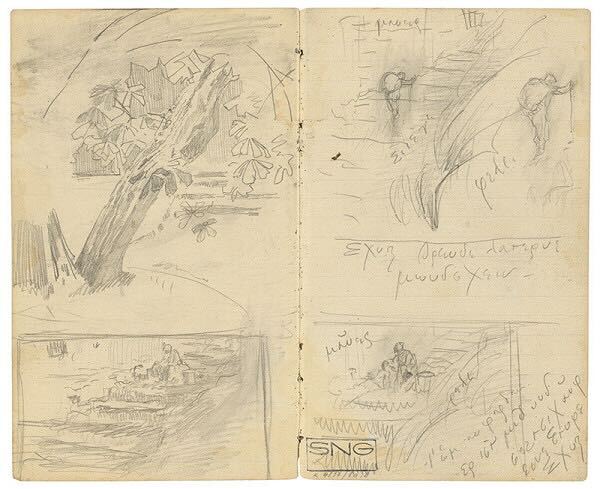
Ladislav Mednyánszky: Sketchbook, 1890 – 1895. Source: https://www.webumenia.sk/dielo/SVK:SNG.K_4817-8
Sharing your impressions and experiences is also possible in a more unconventional way.
We know Andy Warhol, the American painter with Slovak roots, mainly thanks to his now legendary serial portraits. But did you know that he was fascinated by spoken language? During his career, he recorded more than 4,000 audio tapes. He also kept a diary, but someone else wrote it for him: every weekday morning, Andy regularly phoned his assistant and friend Pat Hackett, to whom he recounted in detail everything that had happened over the previous day or weekend. In this way, he documented his expenses, everyday private and social activities, as well as his observations and opinions about the people he met. His assistant then transcribed the phone calls, resulting in thousands of pages of notes, from which she made a selection, and after Andy Warhol’s death they were also published in book form. Just as with the diaries of Ladislav Mednyánszky, the general public thus also has the opportunity to look into his private life, experiences and reflections.
Do you read posts or watch videos in which people share something personal with the world? Where do you most often find them, what form do they take, what feelings do they evoke in you? Do you encounter the sharing of positive or negative experiences more often?
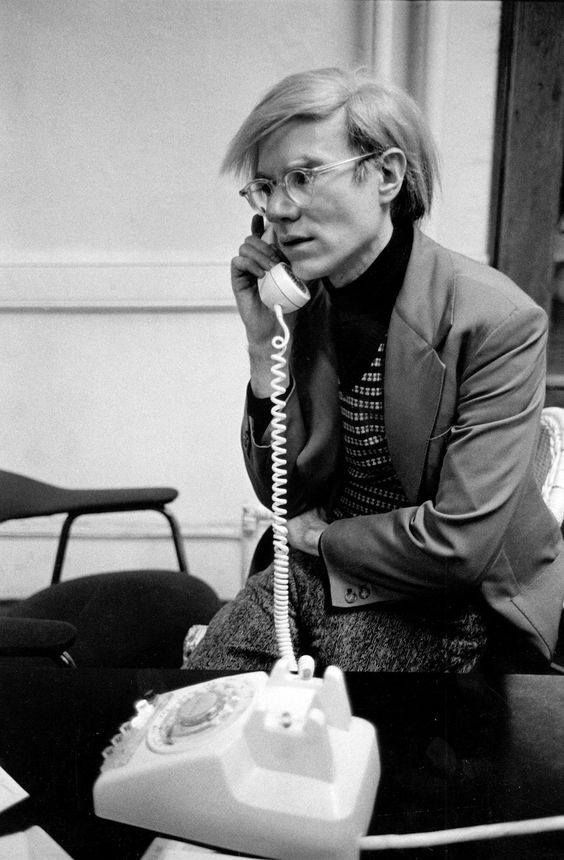
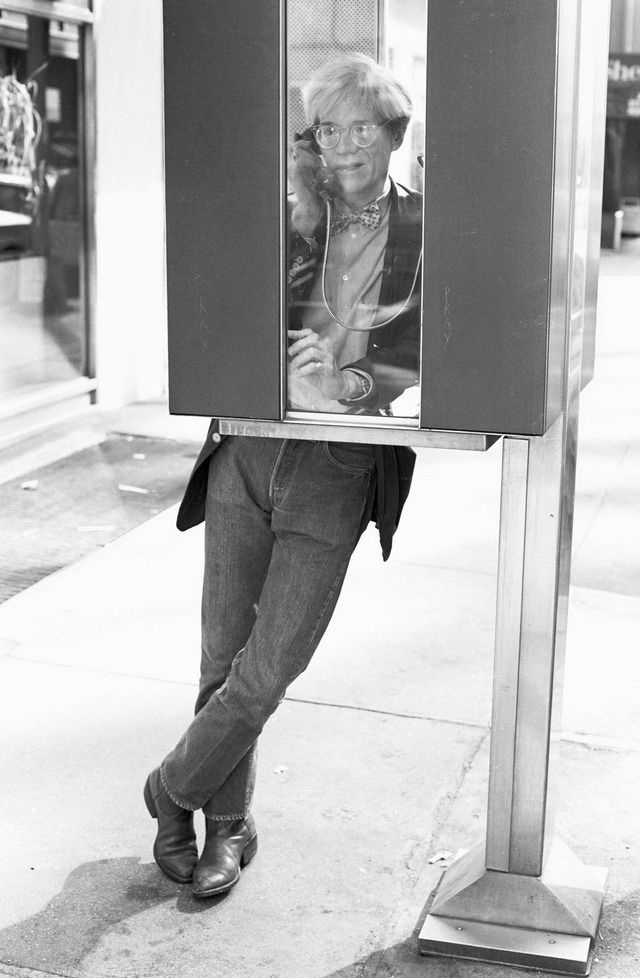
Source: Andy Warhol Museum of Modern Art in Medzilaborce
Activity idea: Sharing joyful feelings helps us experience them more intensely; conversely, sharing our problems may not necessarily lead to solving them, but it often brings a feeling of relief, support and understanding. Sometimes, however, it is not entirely simple, or not in line with our own ideas or those of others. Writing a diary, sharing what we are experiencing with paper, helps many people sort out their thoughts, calm down, and see their current state in a slightly different light. If you want to try a different method, try sharing what you are currently experiencing with a camera. Film yourself during ordinary tasks, special occasions, or confide your feelings and thoughts to the camera as well. Explore whether and how your behaviour in front of the camera changes, even if you do not plan to share the recorded material with anyone. If you then watch it, it will allow you to perceive what you are experiencing with a certain distance and see things with new eyes.
If you have been experiencing mental discomfort for a longer time, do not hesitate to contact professional help, for example IPčko, which is the partner of the competition in this year’s edition.