
The general characteristic of a network is the interconnection of its individual parts. In what different contexts and meanings can it occur? Explore the real and imaginary networks around you through Slovak and international works of art. Discuss and artistically interpret a critical view of social networks, the forms and functions of networks in space, or a network of cooperation within a larger collective.

The proposed activities support digital literacy, encourage the development of live relationships, explore the possibilities, advantages and limits of mutual cooperation, and inspire detailed examination of the forms around us. In addition to art education and the history of art and culture, they can be connected with media education, civics and history.
The network as an artistic form
On the artistic level, the basic property of a network – connecting – can provide endless variations of its parts and their connections, experimentation with regular and irregular formations, or with changes in the angle of view.
In architecture, its function within a given space is also added to the formal aspect. In the reconstructed building of the Slovak National Gallery in Bratislava, the motif of the network – the grid – is used in several places. The architects of the reconstruction, Martin Kusý and Pavol Paňák, worked with it thoughtfully, and in every situation in which they placed it, it fulfils a slightly different function. When viewed from different angles, it creates the effect of moving lines; elsewhere, it refracts incoming light and thus creates a specific atmosphere in the space. On the exterior, it dampens noise from the street; in several places, it is a barrier delimiting the space. In each place, the grid is made up of regularly arranged squares in a dense network, but on closer inspection we can also find small differences. In addition to its various important functions within the gallery complex, the network thus also functions as a unifying element.
Have you already been to the reconstructed SNG building? Where can you notice the grid motif? If Bratislava is far away for you, take a virtual walk through the gallery together with curator Dušan Buran.


Photo: Martin Deko
By the way, the SNG logo, created by Miroslav Cipár, is also composed of simple lines arranged in a grid. Just think—what does the logo remind you of?

Author: Miroslav Cipár. Work: Slovak National Gallery, 2005. Source: www.webumenia.sk
A different view of the network in space can be conveyed by the work of the Venezuelan artist of German origin known as Gego. Her entire oeuvre is literally interwoven with various kinds of networks, grids and meshes. Drawing on her studies of engineering and architecture, she explored various forms and possibilities of arranging lines in a network, as well as the space created by the network itself. Her objects are fragile, organic, subject to bending or distortion. As she herself mentioned, making works of art was a game for her – playing with shapes, variations and space. She also worked directly with the gallery space, which she covered with wire networks. In this way, visitors found themselves inside the network, intensifying its visual effect and their experience of the work. What was very important to her was how and from where we look at a work, and how it can change from different perspectives.
She devoted great attention to the element that forms the network – the line. For Gego, the line was the image itself. Think about how many different straight lines you can draw. In what ways can they differ? You can use an exercise like this to make, for example, a bus journey more varied.

Author: Gego (Gertrud Goldschmidt). Work: Sphere No. 4, 1976. Collection: The Ella Fontanals Cisneros, Miami. Source: guggenheim.org

Author: Gego (Gertrud Goldschmidt). Work: Untitled, 1980. Collection: Museum of Fine Arts, Houston. Source: guggenheim.org

Artist: Gego (Gertrud Goldschmidt). Work: Bug 87/9, 1987. MACBA Collection. Source: guggenheim.org
Activity idea: Networks are not found only in your mobile phones; try exploring your surroundings and finding out where else you can find them! Take a sketchbook and pencil and go on an artistic walk in any space. Observe the nets, grids, and weaves around you; you may even find them in places where you would not expect them. Explore their visual diversity. Observe their shape, size, arrangement, and the interconnection of individual parts, but also think about their function – when are they decoration and when do they serve a specific purpose? By gradually drawing them, you can create a kind of sample book of networks. If you prefer a digital record, take photos of them. Could the sample book serve as inspiration for your future art projects?


Photo: Šimon Lupták
Creating a network of relationships
A network also represents the interconnection of several components and their cooperation. Just as, for example, all the components in the human body are interconnected.
We can also perceive a city as an organism, that is, an organized whole. For everything to function optimally in it, its individual components must be in mutual relationships. Urban planning deals with the creation and development of settlements. Where and what buildings will be built, what the infrastructure will be like, what services should be provided. At the same time, each component has an impact on another. M. M. Scheer’s architectural design and model come from the period when construction of the new Chrenová housing estate in Nitra was beginning. What can you read from the complex tangle of lines and shapes? A different view of the network of relationships that shape the environment, this time Bratislava’s Podhradie, is offered by a painting by Peter Bartoš and Ľudmila Rampáková. The work captures the exploration of the history, the current state, and reflections on the selected place and the possible future of the fragile ecosystem of Podhradie.
Try looking at the area around your home through the network of relationships and functions it creates – what all has to be connected in a functioning city? Could something in your surroundings be done more efficiently?
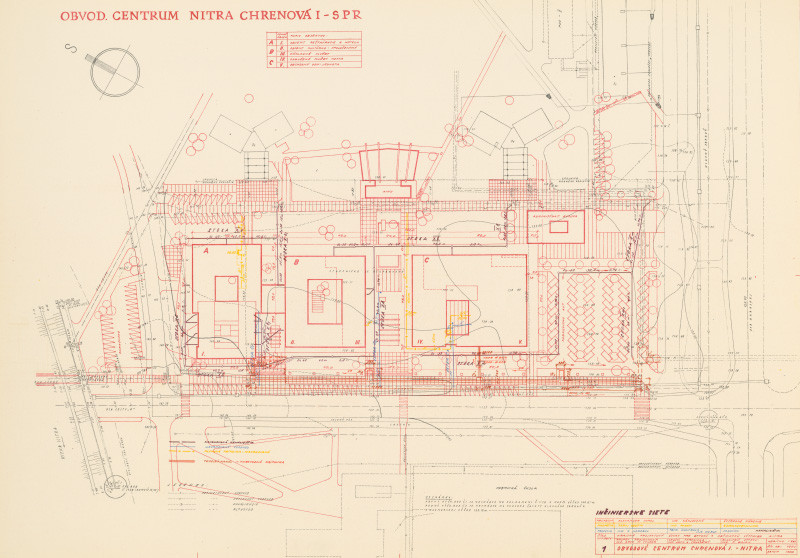
Author: Michal Maximilán Scheer. Work: District Center in Nitra – Chrenová 1. Utility Networks. Scale 1:500, 1968. Source: www.webumenia.sk
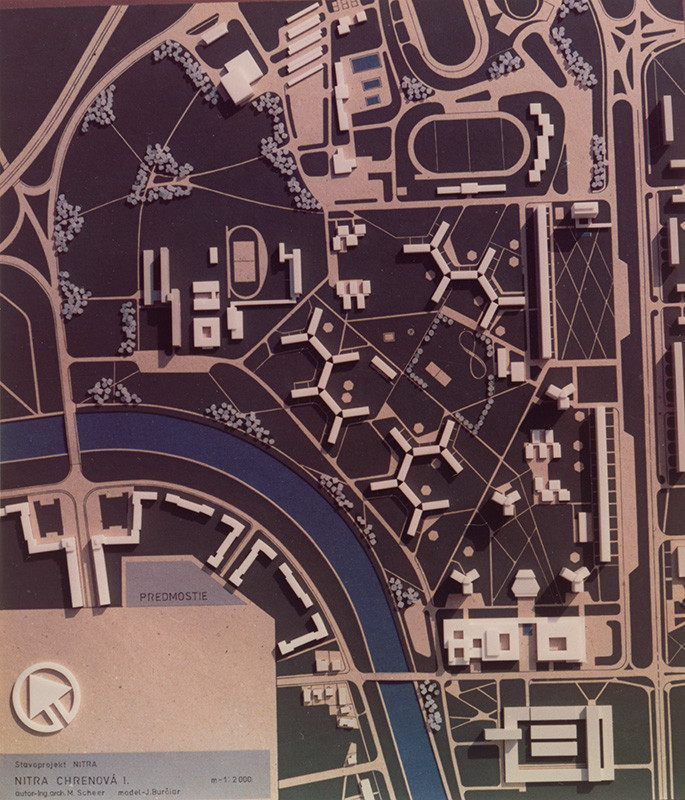
Author: Michal Maximilán Scheer. Work: Chrenová 1 in Nitra. Model of the spatial plan – bird’s-eye view, 1963 – 1970. Source: www.webumenia.sk
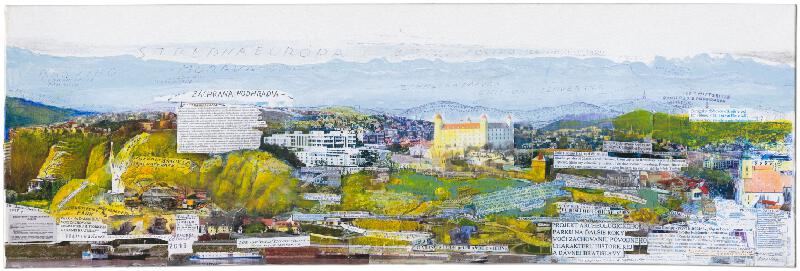
Author: Peter Bartoš, Ľudmila Rampáková. Work: What Could Have Been If They Had Not Destroyed It, 2010 – 2021. Source: www.webumenia.sk
A good example of cooperation from art history is the medieval workshop. Most paintings, sculptures, or altars were created as collective works in which several people took part. Depending on the specific work, various professions could be involved in its creation: painters, gilders, sculptors, carpenters. The role of the workshop master consisted in designing the overall concept or in creating the technically and artistically demanding parts. The “passing along” of a single painting through the hands of several craftsmen is also evidenced by tiny marks – letters which, under suitable lighting, are visible in some places even to the naked eye. They indicate the initial letters of the colors that were to be used on the marked areas. Whoever received the work-in-progress painted the given part according to the mark that another colleague had prescribed there. Take a detailed look at such a notation using the example of an altarpiece from a productive workshop in our territory, known as the Master of Okoličné. Its story and operation will be introduced to you by the website mzo.sng.sk.
Today we can no longer observe the creation of works of art in this way, but we can follow the relationships between individual works directly in galleries. During your next visit, look at the exhibition as a whole – what kind of network have the curators placed the individual works in? What relationships have they created between them in this way? Likewise, every exhibition is the result of cooperation among several components. Can you discern which different professions were involved in it?
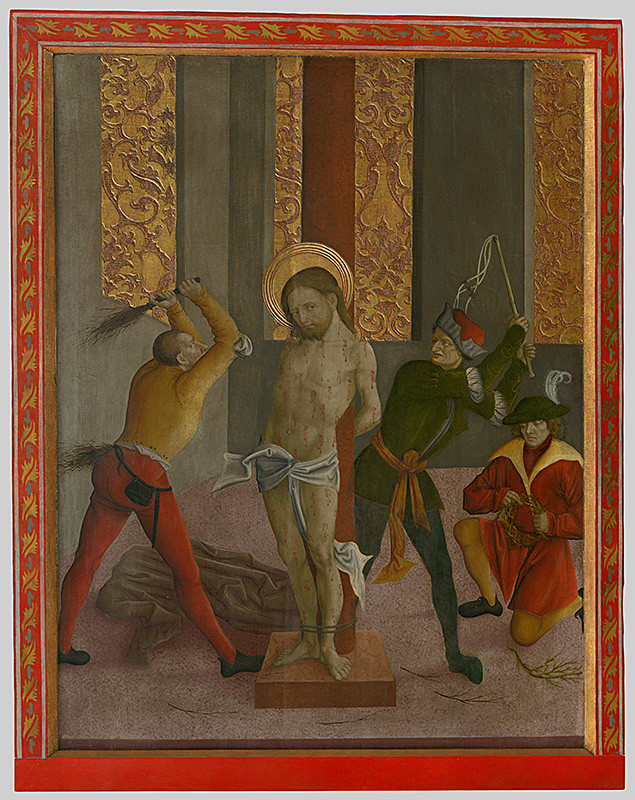
Author: Master of Okoličné. Work: Flagellation, 1500 – 1520. Source: www.webumenia.sk

Author: Master of Okoličné (detail). Work: Flagellation, 1500 – 1520. Source: www.webumenia.sk
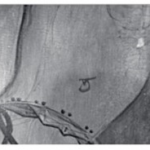
Author: Master of Okoličné. Work: Flagellation (detail, infrared reflectography), 1500 – 1520. Source: Master of Okoličné and Gothic Art of Spiš around 1500, catalogue for the exhibition at the SNG
Activity idea: Create a visual form of the network of your relationships and mutual cooperation! Become the first part of a network that will gradually take shape. Get a piece of white fabric, a needle, and cotton thread in any color. Start embroidering anywhere – creating a network. What you embroider does not have to have a specific form; create stitch after stitch in any direction, and you can change it as you go. It is up to you what stitch you use; enjoy the relaxing activity of embroidery and let yourself be guided. What matters is that your embroidery forms one whole, while enough space remains on the fabric for others to continue adding to it. Then pass the fabric on to someone you know – he or she will smoothly connect to your embroidery, again with a different color of cotton thread, and use the same rules. The fabric is then passed on to another person, and so on. In this way, not only will an embroidered network be created, but it will also reflect the network of your relationships and mutual cooperation. Will the fabric eventually return to you?
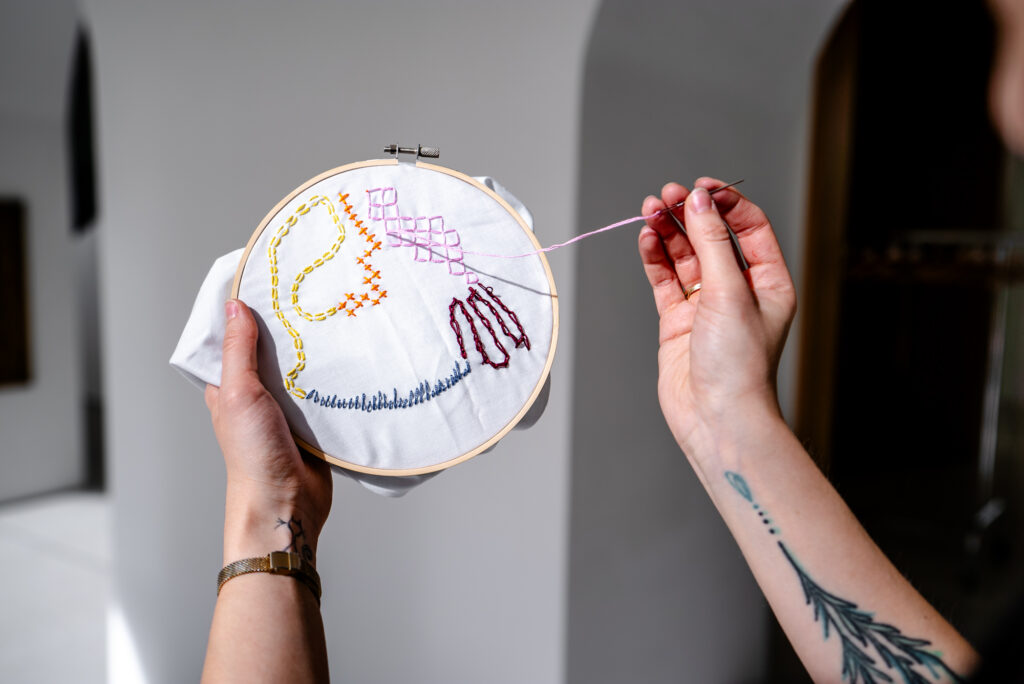
Photo: Šimon Lupták
In the network of information
The space where the greatest amount of information is interconnected and intersects is the internet. After all, even its name refers to its “network” character.
Instant access to information on any topic – what is a huge advantage of the internet is, on the other hand, also a great pitfall. In the almost infinite amount of information, it is very easy to get tangled up. In her work, contemporary Slovak visual artist Ivana Šáteková comments ironically and critically on current social events, which she connects with traditional, folkloric elements. The embroidery entitled Conspiracy Theorist depicts a figure dressed in traditional Slovak clothing sitting in front of a computer. The conspiracy theorist’s face, however, is made up of a tangle of threads. “I don’t know how it’s possible, but from time to time even people I have known for years turn out to be conspiracy theorists capable of believing practically anything,” says the author.
What conspiracies have you encountered recently? On what basis do you assess the relevance of the information that reaches you? For an overview of sources of common conspiracy theories and how to recognize them, you can look, for example, at the website www.konspiratori.sk. Also think about why social networks create more space for spreading such theories or hate speech than, for example, personal communication.
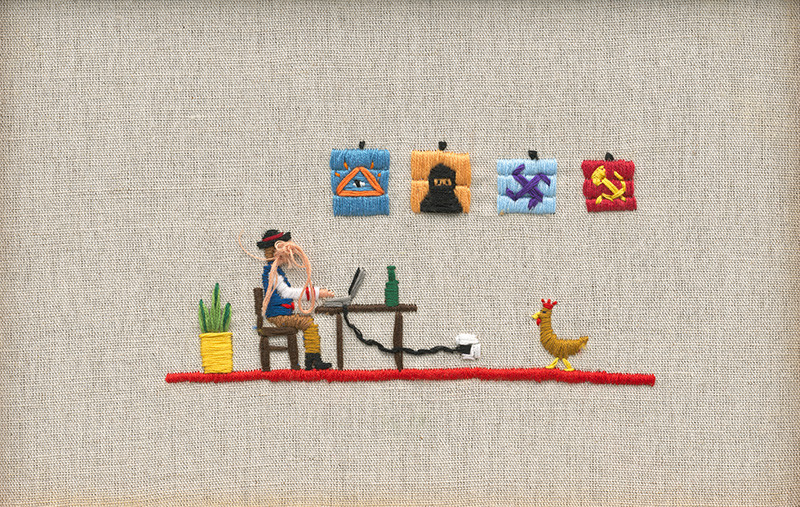 Author: Ivana Šáteková. Work: Conspiracy Theorist, 2017. Source: www.webumenia.sk
Where can your photos that you publish online end up? To what extent do you consider their visual qualities? The collection *.jpegs by photographer Viktor Šelesták presents a number of amateur photographs published on Slovak classified-ad portals. By exhibiting photographs “collected” from the internet in a gallery, it encourages us to notice other aspects of them and subject them to artistic examination. Šelesták thus offers us a diverse spectrum of various photographic approaches, where we observe funny compositions, surprising angles of view, and striking plays with color.
How would you react if you found your photograph, published on the internet for entirely different reasons, at an exhibition in a gallery? Can this change the value of the photograph itself? Also consider the question of authorship – what enables Viktor Šelesták to become the author of a collection of photos that were taken and published by others?
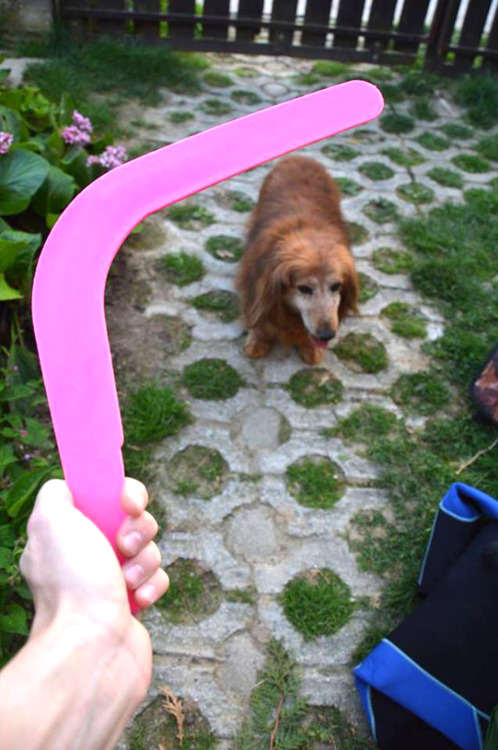
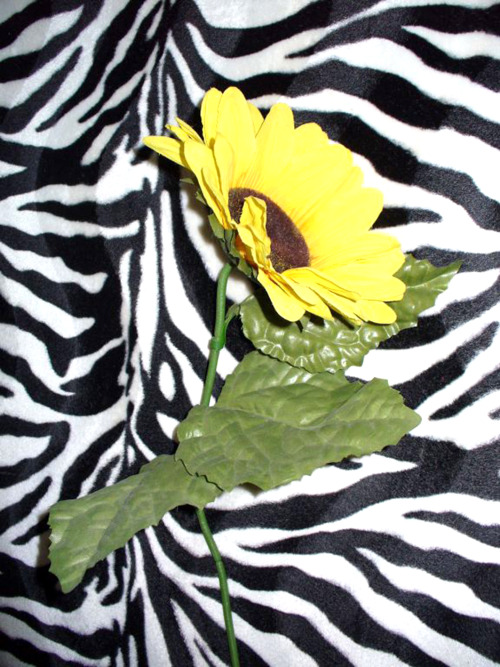
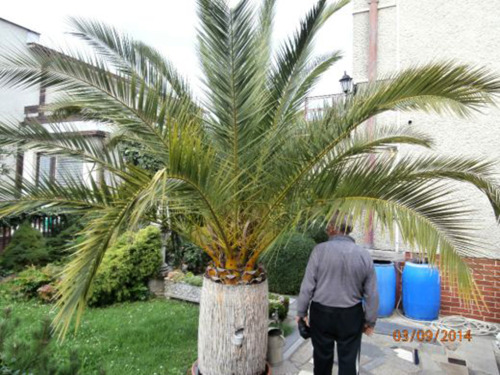
Author: Viktor Šelesták. Work: *.jpegs, 2014. Source: https://selestak.tumblr.com/
Activity idea: Browse through the lists of your friends and followers on social networks. Who are they, where do you know them from, what kind of relationships do you have with them? Since social networks are a tool for connecting people, try writing to or otherwise reaching out to someone you have not been in contact with for a long time. You may be surprised by what you learn about that person, and it can lead to a pleasant conversation after a long time. Conversely, try bringing something from the way social networks work into the real world as well – for example, instead of a like, compliment someone in person. Look for ways to make contact naturally and pleasantly, or to brighten the day of the people around you.
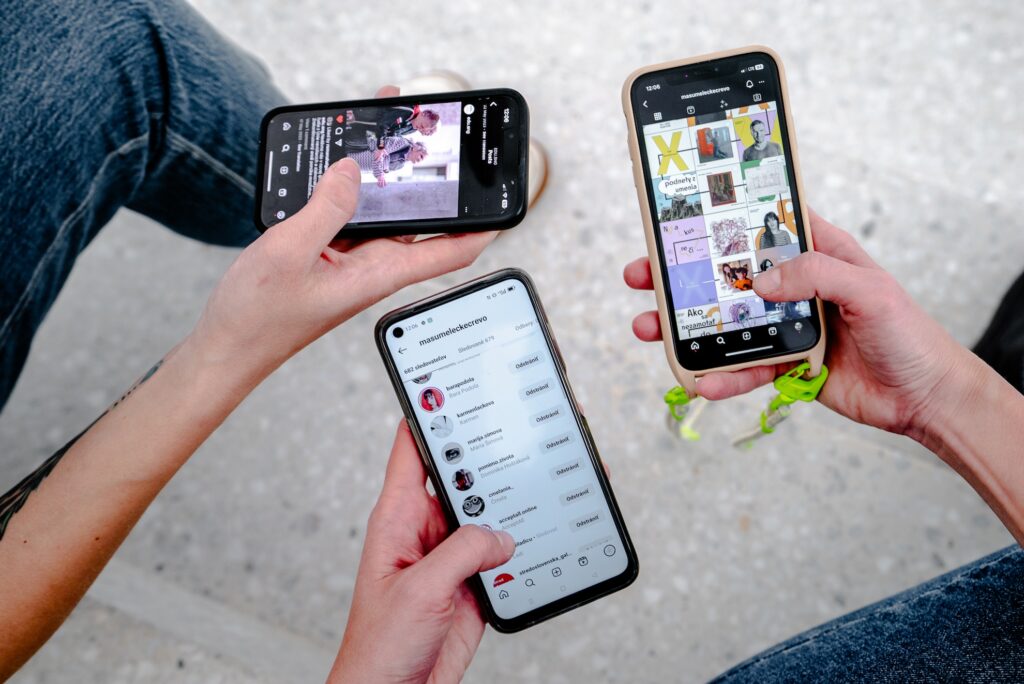
Photo: Šimon Lupták