
This year, too, we will inspire you with the work of young people!
To kick off the new week, we bring you inspiration from sculpture student Tomáš Bede from Nitra.
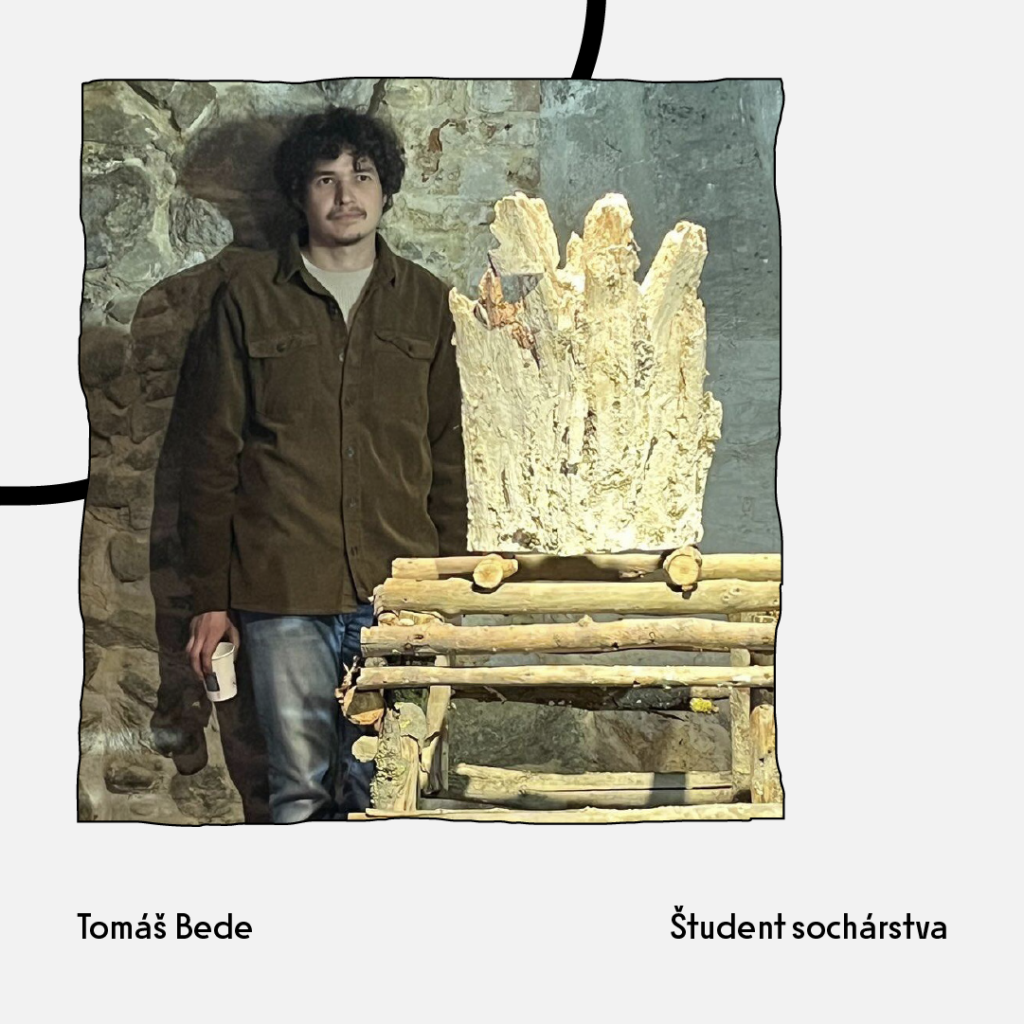
Tomáš studies at the Academy of Fine Arts and Design in the free sculpture studio under the guidance of Štefan Papčo and his assistant Matej Gavula. Besides school, he engages in activities that enrich and inspire him, as well as paid work, which is a kind of sacrifice so that he can once again find space for creating. This coming weekend brings the Winter Review of VŠVU, where you will also find Tomáš’s pieces. We recommend checking it out.

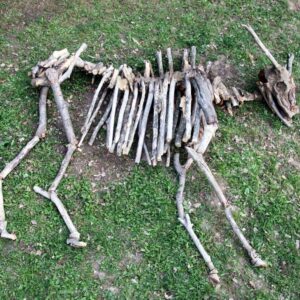

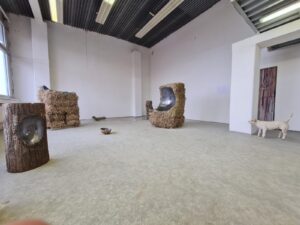
Tomáš is drawn in his work to diverse themes, e.g. nature, prehistoric and ancient art, ecological, magical or dark motifs, but what is important to him is that they are treated authentically and sincerely. For him, art is the result of absolute openness, an inexpressible reality, memory and manifesto. That is also why he tries to create without the intention of “making art”. He often writes poems that help him shape his visual expression. In his work, he uses materials that come from the earth and can also return to it – clay, wood, stone, sand, straw or bones. The fewer tools he uses, the freer he feels while creating. He prefers tools he has made himself, or handcrafted or older repaired tools, although sometimes he cannot do without industrially manufactured ones. He is currently working on his thesis, in which he explores the connection between natural building and sculpture. Together with Simona Novická, he is preparing a joint exhibition that should take place at the end of January. Follow @tomas.bede on IG so you don’t miss the opening! 😉

We also asked Tomáš a few questions!
🐍 Why art?
🧔 “Because I find meaning in it. Since childhood I have been skilled and creative, but I never excelled at anything as clearly as in art. I had my strengths and weaknesses, but drawing and creating were always what fulfilled me the most. After school I went through various jobs – from commercial graphic designer to construction worker. Working in stonemasonry awakened in me a love of craft that guided me onto the path of creation. Today, art is not only a way of expression for me, but also a refuge and a source of inner peace.”
🍜 What about you and sharing? Do you like sharing, or not? If so, what are you sharing right now?
🧔 “Although I’m not a proponent of shared projects, I am supportive – I share tools, help technically and with advice. I don’t turn down group exhibitions and I’m open to them in the future.”
🧡 What brings you joy?
🧔 “Simple things bring me joy – sunny weather, helping, people’s smiles, playing with my dog, walks in the forest, a ride in an old car with my girlfriend and Neil Young’s guitar solos.”
Thank you to Tomáš for the interview.
…
We bring you creative inspiration for the new week! Today we would like to introduce author Lucia Večerná, whose work is connected with the Danube River. It flows through our country, as well as nine other countries, which creates an interesting social context.

Lucia comes from Bratislava, completed her bachelor’s studies at the Department of Intermedia at @vsvu_afad and is currently continuing her master’s studies at the Department of Printmaking and Other Media. In her free time, she reads and sketches, takes walks in the forest with company for a pleasant conversation, or hops on a train for a spontaneous visit to friends.
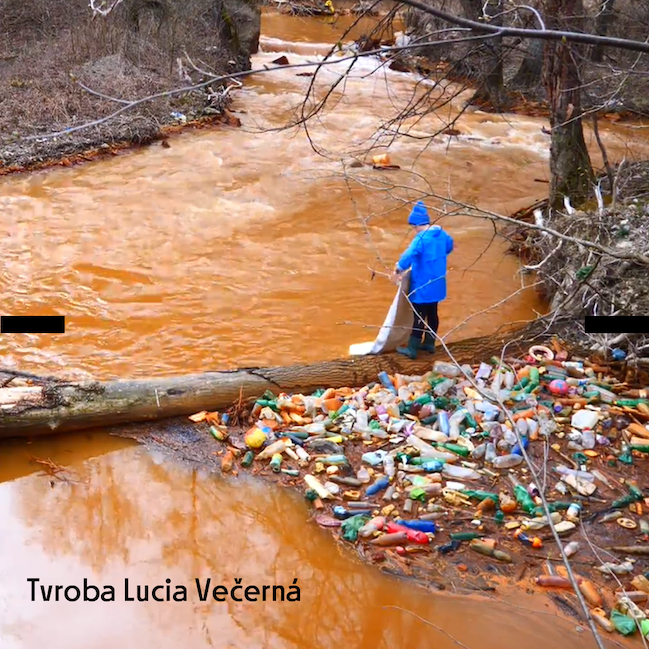
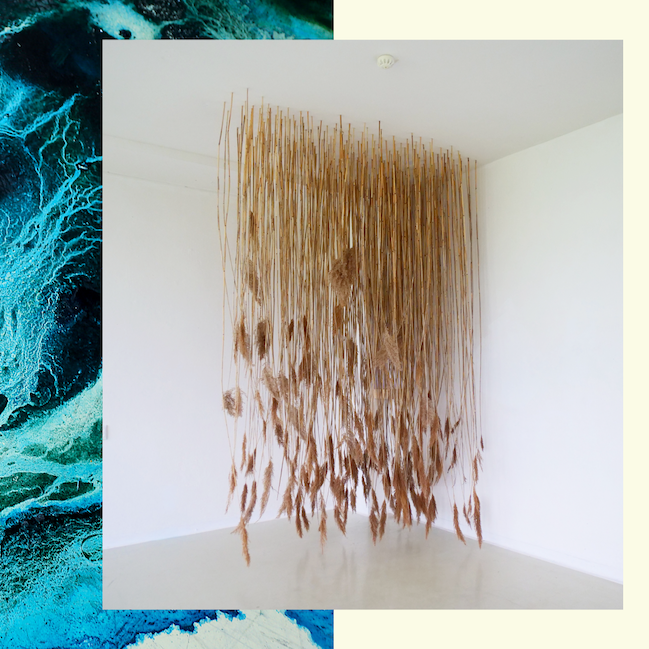
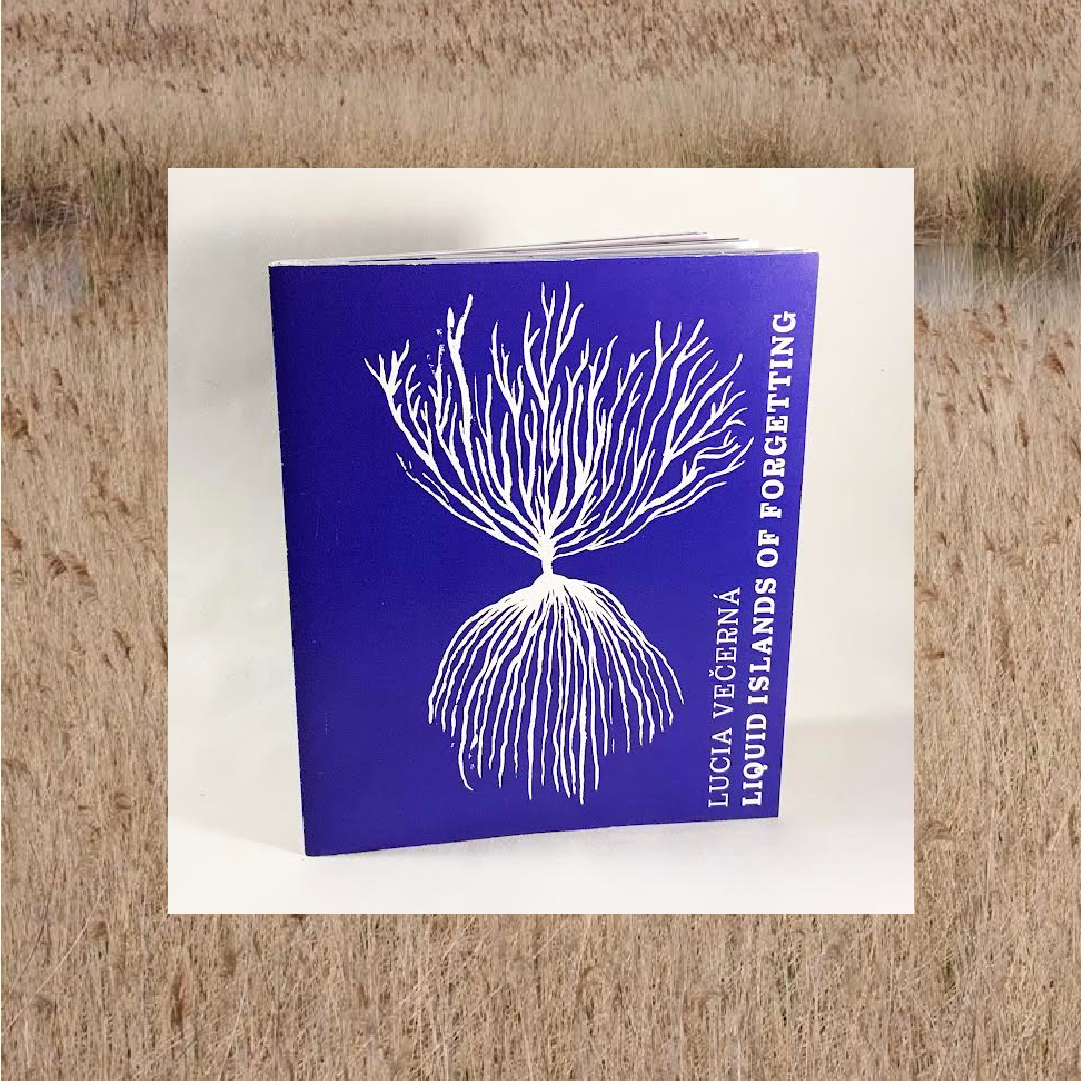
In her work, @luciavecerna is mainly interested in themes of landscape transformation, which she perceives as an interconnected organism. She has long been fascinated by the inland Danube delta, to which she repeatedly returns and reflects on it. One dimension of why the theme of the Danube landscape fascinates her is personal, as she grew up in that environment and likes to return there. Another is the vastness of the transformation of this river landscape that is taking place there, thanks to which she is able to observe and record it. Lucia works mainly with natural materials and strives for her work to be able to disappear naturally, just as it came into being, leaving no material traces. She uses, for example, reeds, which can subsequently decompose, or natural pigments from algae or rocks. As for media, in addition to installations, she also uses video – she mainly creates video recordings of fieldwork in the landscape, where she spends a great deal of time, whether simply observing or collecting material. Lucia is currently preparing large-format prints created directly on the water surface. Before the summer, she is also planning a residency, and some exhibitions are beginning to take shape as well.
We also asked Lucia several questions that we ask artists. We enjoy observing the diversity of perspectives and starting points that we find in the answers. Dive into them with us!
What is your greatest challenge in creating?
Becoming a good and ever-better observer of the environment and surrounding processes, as well as of what is happening within me.
Why art?
When I was younger, I hoped I would work in a circus. So it came naturally, and for a long time I was rather searching and, in fact, I am constantly exploring the possibilities of how one can approach creation.
Which network captivated you?
Definitely the network of river branches.
If you could choose anything you will do tomorrow, what would it be?
If it could be anything, I would move to a river and keep Indian Runner ducks.
Thank you @luciavecerna for the interview, and we look forward to her new outputs!
…
Today we would like to introduce you to the photographer Daniela Dolinská.
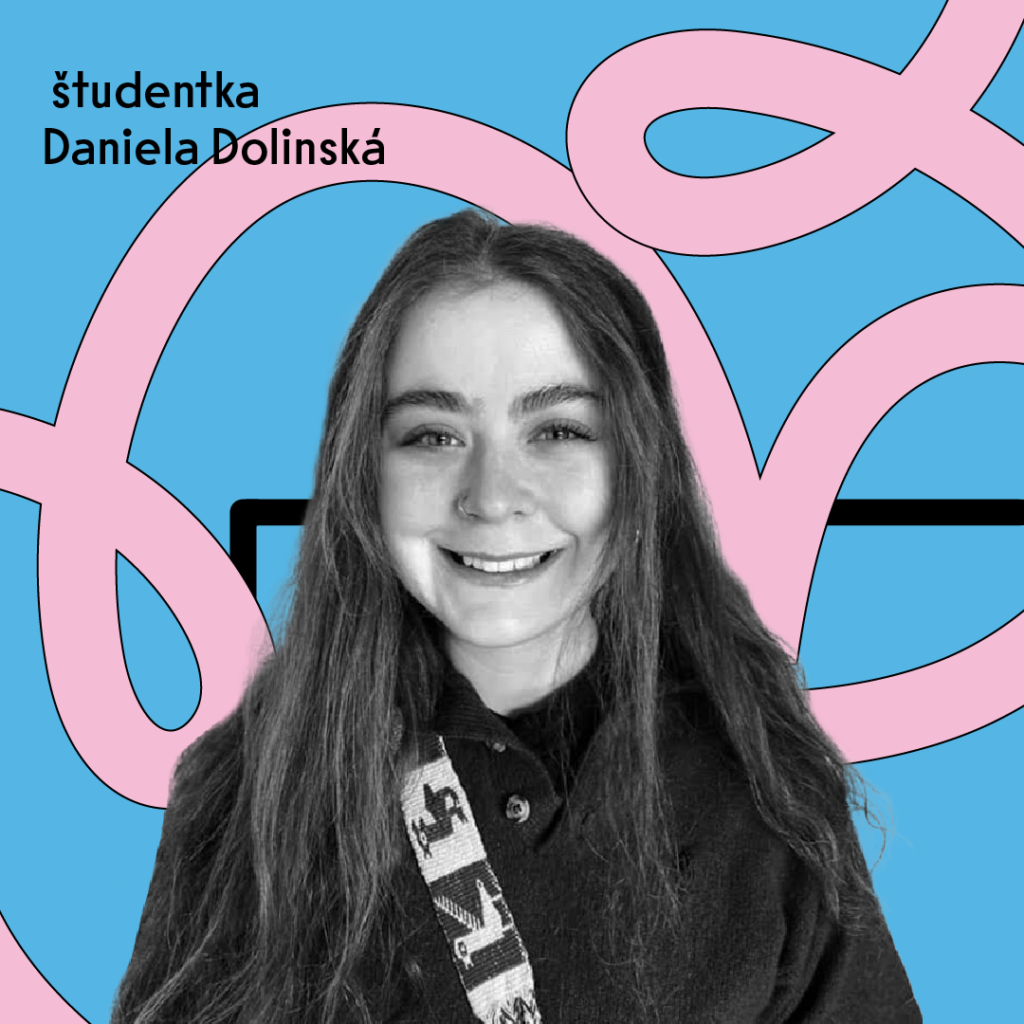
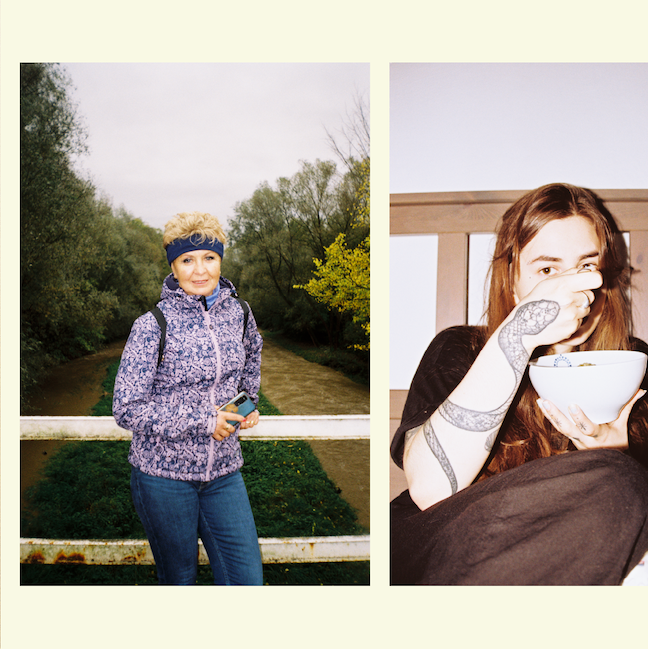
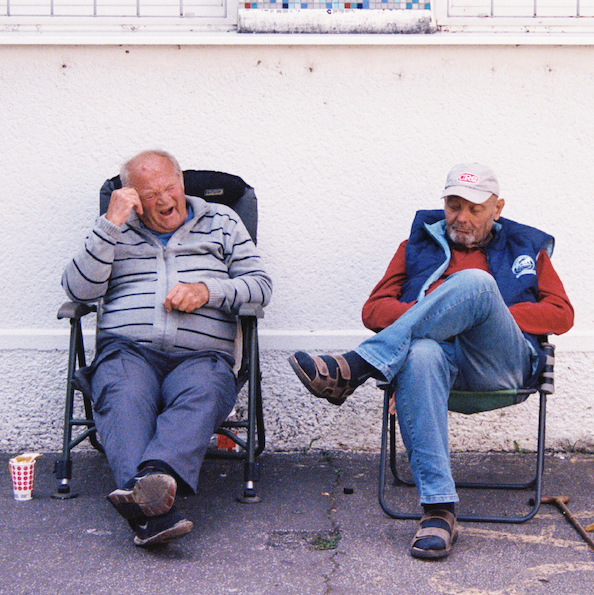
She looks at one through an analogue camera and at the other through a digital one. In analogue photography she focuses on fragments of life. Through social networks, she shares her subjective view of ordinary and extraordinary things she experiences in life, the people she meets, and the situations she finds herself in. Most of the photos are captured spontaneously with the aim of creating a kind of documentary archive. In digital photography she also focuses on a documentary character, in which she tries to bring an objective view of things, events, and various other types of events into her work, while paying attention to her own visual language. She is currently working on her diploma thesis entitled Mama, which will take the form of a documentary film. Outside school, Daniela tries to capture public affairs and the political situation in Slovakia. It will come in handy! 🤞
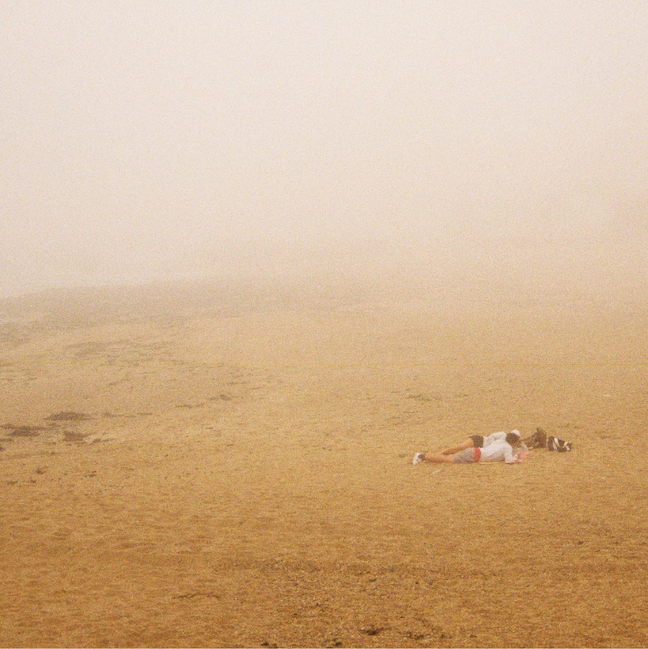
We also asked Daniela Dolinská a series of questions, which you can, for example, answer yourself too!
What is your biggest challenge in creating, and why art?
“The biggest challenge is always being in the right place at the right time, with a camera as well. For me, art is a kind of message and at the same time an image of society, which I consider an essential part of life. Art writes history, and I am glad that in this respect I can be an observer of the art of others as well as its creator myself,” she adds.
Which network got you? (feel free to take the word network figuratively too)
“For me, Instagram is a virtual gallery when it comes to photography. However, all social networks are, for me, something like fire – a good servant, a bad master.”
What or who inspires you?
“Definitely the world ‘out there.’ I don’t mean traveling all over the world. It’s enough for me to step out of the house.”
If you could choose anything you will do tomorrow, what would it be?
“To laugh so hard that my stomach hurts with the people closest to me.” 🙂
Thank you @bel0shka for the interview, and we wish you the best of luck in your creative efforts!
…
Since this year’s theme of the Do You Have an Artistic Gut? competition is Network, we decided to approach textile designer Petra Viacianová for our Young Creation column!

Petra originally comes from Brno, but since 2015 she has lived in Bratislava, which she often alternates with Denmark. She is currently in the 2nd year of her doctoral studies at @vsvu_afad in the Department of Textile Design, where she also completed her bachelor’s degree. She completed her master’s programme called Design for Planet in Denmark at #designschoolkolding. When she is not engaged in activities that are more or less related to her doctoral research, she enjoys cycling a lot, growing tomatoes, and trying to read more.

The work of Petra Vicianová is closely connected with life. Sustainability (not only) in textiles is something that forms a common foundation for both her work and her personal life. She enjoys experimenting with new materials in combination with traditional craft, likes asking provocative questions, and speculates about possible futures. For her, the process of creation itself is more important than what emerges at the end of it, because it brings her opportunities to learn and respond. Textile fascinates her with its versatility and ability to penetrate the most diverse fields, which is also reflected in the materials used in her projects – human and animal hair, homemade playdough, banana peels, and currently a wide variety of rocks and minerals, which she uses for dyeing and printing textiles as part of her doctoral studies. For this work, she also received a nomination for the National Design Award 2023 in the Student Design category!
🧪 You can see Petra’s experiments on her IG: @stained.lab

We also asked Petra a series of questions, which we have upgraded a little since last year!
What is your greatest challenge when creating?
To create responsibly. Since my projects in recent years reflect various approaches to sustainability, the biggest challenge for me is to take all possible details into account and take the most responsible path.
Why art?
In my case, it is more about design than art. But if I had to answer “why a creative field?”, then it is definitely about the freedom it brings into my life. And somehow I sense that this freedom comes because I do what I enjoy and what I find meaningful. At the same time, it is a very natural way for me to communicate my thoughts.

Which network has got to you?
Lately, the networks of management and bureaucracy have been getting to me, because doctoral studies bring with them a lot of email communication, arranging and dealing with things, filling in applications, applying for grants, and I can quite easily get tangled up in all this.
What or who inspires you?
I manage to find inspiration essentially everywhere. When I am working on a topic, I suddenly feel that everything around me can, from a certain perspective, be used as a metaphor. But in general, it is definitely mainly nature, animals…
If you could choose anything to do tomorrow, what would it be?
I would turn off the internets and go for a walk in the forest for the whole day, I would take tea in a thermos and biscuits with me, which would certainly get damp over time. And in the evening I would go for a new tattoo.
Thank you to Petra for a brief insight into her life and work!
…
We continue to present the work of young people! Meet student Bianka Ivanová, who is in the 1st year of her master’s studies in the Printmaking Studio under Professor Zbyněk Janáček at the University of Ostrava. She also creates in her native Orava, where you may know her under brands such as @art3um or @dvatlacky – where she takes detours into creating with tangible materials.


What is the greatest challenge for you? Taking on unknown things and experiments.
How do you want people to remember you? As an open personality with an interest in the world and the beauty in it.
Whose work inspires you the most? From the current Slovak scene: Dana Tomečková, Katarína Poliačiková, Lucia Gašparovičová. Besides the contemporary scene, I strongly perceive the generation that began creating in the 1960s, such as: Rudolf Sikora, Miloš Šejn, Zorka Ságlová, the Medek couple. The other half of my personality, which loves illustration, follows, for example, Klára Štefanovičová or Susie Hammer.
Thank you to Bianka for the interview and we wish her the best of luck in her future direction!
…
Today we would once again like to inspire you with the work of young people! I would like to introduce the artist René Lazový.
 René was born and grew up in Bratislava, where he also had his first more intensive contact with art at the secondary school of art and design. He is a recent graduate of the Department of Photography and New Media at VŠVU, and his next step is to continue with Master’s studies at University of the arts London in the field of Fine Art. His work is dominated by themes devoted to the interaction and relationship of humanity with the environment of our planet. He personally believes that these are precisely the themes that need to be communicated in the future. He is currently working on creating a process whose purpose is to constantly communicate the concepts he is currently thinking about through any medium. One of them is the subjective perception of time in relation to space. Without time, the existence of space as we know it is not possible, and without space, the existence of time as we know it is not possible. Our perception lies in the continual discovery of both, in connection with our own being.
You can also see his work, for example, on IG

And of course we also asked René some questions: What is the best thing about being an artist? What is the biggest challenge for you? How do you want people to remember you? Whose work inspires you the most?
The best thing about being an artist is the possibility of freely expressing one’s thoughts not only in words, but through any chosen medium. This creates a unique opportunity to conduct a dialogue with the world. The greatest challenge in creating is to create and communicate quality, relevant and current themes that the audience is able to pay attention to. I want people to remember me as a person who devoted his life with determination to what fulfilled him and also inspired other people to create a better future. It is hard to be specific, but if I had to name someone, it would be James Turell.
We thank René for the short interview and wish him the best of luck abroad!
…
During this year of the competition, we are continuing to present young Slovak art!
Today we would like to bring student Radim Straka to your attention, who is currently based in Prague and is completing his master’s studies at UMPRUM in the Studio of Intermedia Confrontation under the guidance of artists Michal Pechouček and Dominik Gajarský. He completed his bachelor’s studies at VŠVU in the Painting Studio.

In his work, he engages in experimenting with material and observing situations, through which he seeks his own approach to representation in the medium of painting. In recent semesters, he has been working with film, from which he draws in the medium of painting. And he is fascinated by big things!

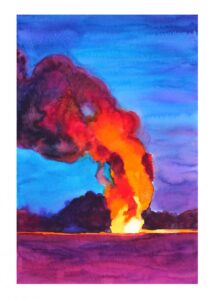


You can also follow Radim on IG:@radimneznamy
We also asked Radim a few questions that we usually ask young authors and artists:
What is the best thing about being an artist?
The possibility to express an opinion, to take action, to change, to decide for oneself, to experiment in various fields, to work with chance as an intention, and to influence one’s surroundings through the actions carried out in the form of a work, whether consciously or unconsciously.
What is the biggest challenge for you?
To observe one’s own thing impartially.
Whose work inspires you the most?
There are, of course, many names of authors/artists; based on the approach and the particular problem I am dealing with, this changes during this period. I discover new authors/artists and examine the old ones. I usually move within the sphere of expression, color and monumentality.
We thank Radim for the interview!
…
We are continuing with the work of art students! Today we would like to introduce you to Mária Kekeláková, who is a 4th-year student in the free printmaking studio of Professor Zbyněk Janáček at the University of Ostrava. She works on her art at home in Orava, as well as in Ostrava.

For the last two years, Mária has focused on the relationship between humans and nature, which she developed in her bachelor’s thesis Vogrudek. Mária’s inspiration is mainly nature – its forms, shapes, structures, the garden, and her mom. The concept of Mária’s work derives from the place where she is located. She likes working with living material such as plants, clay, potatoes and the like. She enjoys pushing the boundaries of printmaking and seeking new possibilities.
You can find more of Mária’s work on IG: @maria.kekelakova or at www.mariakekelakova.me


We also asked Mária a few things!
What is the best thing about being an artist?
I can keep playing, exploring and discovering. That is what I enjoy most about art. The diversity and the community, which is very inspiring.
What is the biggest challenge for you?
Experiments with printmaking techniques that may not succeed.
How do you want people to remember you?
As a person who loved to create.
Whose work inspires you the most?
I am inspired by the work of artists such as Anna Ročňová, Anna Trojanovská, Zorka Ságová, Milan Maur, Ingrid Leden, Ingela Ihrman, Marta Fišerová Cwiklinski and Vladimir Havlík.

…
We are continuing to introduce young Slovak creative work!
Today we are introducing VŠVU student Lilla Gombos, who is in her 3rd year in the new 3EAM studio under the guidance of artist Rastislav Sedlačík. In her work, Lilla focuses on self-expression of her experience of the world, her mental health difficulties, and the difficulties of those around her arising from existential or social issues. She paints on canvas or on paper, but in the future she would also like to work with other media. She would like to experiment with objects or create an installation, video, or performance within the themes she explores in her work.

We also asked Lilla the questions we usually ask young creators:
What is the best thing about being an artist?
For me, the best thing is probably the creative process and the thought processes connected with it.
What is the biggest challenge for you?
I don’t think I have any particular challenges in my work.
How do you want people to remember you?
I’ll leave that up to people. 🙂
Whose work inspires you the most?
I can’t answer specifically; many artists inspire me.
You can follow her work on IG: @immoral.eve

…
Today we would like to introduce you to an interesting artistic collective project – HMOTA magazine!
The magazine was created out of the need to establish a platform that would connect creative and engaged young people in Slovakia. The project was created by student Laura Bilíková, because she felt that in her home environment she lacked a space where she could develop her creativity. HMOTA has grown over time and today it is made up of a diverse collective of 40 young people from various professions. Together they publish a cultural magazine that gives visibility to young artists, supports creative collaborations, and maps the ideas of the emerging generation.

Why the name HMOTA?
In today’s digital world, media are transforming mainly into online form and print is perceived rather symbolically. “However, we believe that paper media still have irreplaceable value. Owning a physical copy, touching visual illustrations, and holding a piece of tangible art in your hands,” adds the magazine’s editor-in-chief.
How can you become a contributor?
The capacities of print media are significantly limited, but the magazine regularly publishes open calls on its social media: @casopis_hmota. They are looking for active contributors who have a unique authorial style and a shared passion for the development of the magazine.
HMOTA magazine is published primarily in paper form as a response to increasingly rare print media, but at present some articles can also be read in digital form at www.casopishmota.sk in the BLOG section.
This section is a full-fledged part of the project; it consists mainly of reports from events for which we have accreditation, as well as book and film reviews.
The magazine is published four times a year, one issue for each season. The entire content of the magazine responds to the main theme of the issue, which the collective works with both in depth and breadth, and reflects its various aspects. The magazine thematically addresses topics that are current and, from their perspective, important or often underrepresented in society. They process them with reference to credible sources in cooperation with experts, as well as artists. In terms of text, HMOTA consists of articles about art, journalistic articles, essays, and artistic texts. In addition, the collective strives to make a cycle of poems, a review, and a survey permanent sections.

We also asked more about working for HMOTA magazine.
One question – two answers:
Why did you decide to become part of HMOTA magazine?
answers Emma Kraus, illustrator: I have known about HMOTA since its beginnings; before I joined the illustration editorial team, I was a “model” at one of the photo shoots for the articles. I came to the magazine as an inexperienced fourteen-year-old illustrator. Since then, my work has moved forward incredibly – I have learned a lot from the other, more experienced people on the team, and I am slowly discovering what my visual identity is.
answers Radovan Vašák, graphic designer: After a summer internship at an advertising agency, I realized that the commercial world and advertising were not for me, and that I wanted to devote myself more to art and culture. This thinking was also naturally reinforced in me every day through my university studies. I was lucky that Laura Dimová, my good friend and the head of the graphic design editorial team at HMOTA, approached me with an offer to collaborate.
What makes working for HMOTA magazine interesting and enriching for you?
answers Karla Šavrtková, photographer: I think that the most HMOTA gives me is the community of people and the networking connected with it. Since I became part of the magazine, I have felt a truly strong sense of belonging, a feeling that I belong somewhere, especially thanks to the people who make up this whole and the values we share as HMOTA. Important friendships and collaborations are formed here, built on mutual respect, trust, and love for what we do.
What is the biggest challenge for you when creating content for the magazine?
answers Zuzana Gustiňáková, editor: As editors, we do not interfere with the meaning of the text to a large extent. Even so, it is sometimes difficult for me to decide how to intervene in the text so that it is constructive for the author, while at the same time making sure the article is stylistically polished, consistent, and understandable.
answers Peter Naništa, editor: When writing an article, I often have trouble formulating sentences so that, together, they make coherent sense, since I am a bit of a chaotic type. Also, handing things in on time, which is very important when creating as part of a collective, and it is not always something I manage completely well.
Thank you to the members of the HMOTA collective for the interview. We look forward to further collaborations!
Follow HMOTA here: @casopis_hmota or on FB: casopishmota
You can purchase HMOTA on the website www.casopishmota.sk in the SHOP section or at the Artforum bookstore in Banská Bystrica.
We continue to present the work of young artists!

Nataly Středová graduated from a bilingual grammar school in Košice a few months ago. She currently lives in Prague and is taking a gap year, during which she is preparing a portfolio of work for universities focused on textile design and making rugs under the brand @rak.rug.
In her work, Nataly focuses primarily on textile design – tufted rugs, but also other textile production. At the same time, she enjoys painting and illustration. In her work, she does not yet want to limit or pigeonhole herself, because as a “newcomer” to the art world she is still trying to find what would suit her best, and she likes trying to work with various media. At present she has become very interested in working with yarn/wool, and gradually she would like to get deeper into this craft – whether that means processing wool as a raw material, dyeing her own fibers with pigments, but above all she would like to learn tapestry weaving.
In her current rug work, she is so far mostly working on private commissions, which are usually her own designs. She has not yet had time to devote herself to free rug creation, since it is very financially demanding because of the material, but she enjoys working with the spatiality of rugs, colors, and shapes. She really enjoyed working on the rugs Desktop I. and II., which depict a computer desktop with many windows, because they reflected her state of mind connected with the complicated (quarantine) events. This rug could be called a glimpse into her “diary”.
She tries to look for inspiration wherever she can – she follows various textile artists, as well as various illustrators, and she also likes to be inspired by the work of artists from the past. She is often inspired by various situations from life, which she tries to infiltrate into her work.

We also asked Natália: What is the best thing about being an artist? What is the greatest challenge for you? How do you want people to remember you? Whose work inspires you the most?
What I enjoy about artistic creation is that my work differs considerably from what I devoted most of my life to as a grammar-school student. I now use the knowledge I have acquired mainly in practical ways; I often spend hours doing manual work – for example when making rugs, which I have found has a very therapeutic effect on me. But I would probably say the greatest highlight in my work is that my work and effort become tangible objects, unlike essays or preparing for and writing tests. I enjoy the fact that my work always leaves behind something physical, something I can return to myself, take pleasure in, and it is precisely something by which, hopefully, people will remember me. It is also very encouraging to share my work with people and receive positive feedback on it; it is something that strongly motivates me to keep creating and to move forward.
My greatest challenge is the constant struggle with creativity; I often catch myself being too pragmatic, thinking about everything theoretically and, in fact, generally thinking too much, haha! It is something that grammar-school graduates are often guided towards, and sometimes, as we all know very well, unlearning ingrained bad habits can be very difficult. Of course, I keep trying to fight it and, despite my creative “limitation,” to create various little paths that make things easier, and I try to be more uninhibited.
In textile design, I am inspired by Erin M. Riley, who weaves tapestries with amazing detail. The main themes of her works are various childhood traumas, family dynamics, violence, intimacy, and sexuality, which she depicts very realistically. Even though these tapestries may feel heavy to some people, that is exactly what I admire about her work, because the themes she deals with should never be taboo.
In rug making, I am very inspired by typical Moroccan rugs, which are strongly connected with Moroccan culture and are known for their bold colors and geometric patterns.
My final major source of inspiration is the Instagram account @itsnotgallery, which focuses on the work of contemporary male and female artists. Among my favorites from this page is Martin Kačmárek, whose work I also enjoy following.
You can find Natália’s rug work at: @rak.rug
Her independent work on her personal account: @natalyzasesmrdi
…
After the summer, we are continuing with the section on young creators! Today we would like to introduce you to Terézia Fillová – a final-year master’s student at VŠVU in the Illustration Studio. She completed her bachelor’s studies in the Department of Graphic Arts in the studio of Assoc. Prof. Róbert Bruno at the Academy of Arts in Banská Bystrica. She currently lives and works in Bratislava.

The work of Terézia Fillová naturally touches on themes that are deeply her own. In more demanding topics, such as politics or ecology, she does not feel sufficiently educated, so she tries to avoid them; yet even with themes that are close to her, she paradoxically also finds herself in more complex ones. She likes to draw inspiration from her experiences, memories, and events happening around her – in a similar spirit to Frida Kahlo: “I paint myself because I am the subject I know best.” She is currently finishing her first children’s book, and she greatly enjoyed transforming her childhood imaginings into something real, while at the same time searching for various visual ways to communicate them to a child audience. As for the media she works in – she likes intaglio and lithography techniques and their laboriousness, more complex processes, and the way they teach her patience and perseverance despite many setbacks. During the pandemic period, she returned again to classic “school” media such as pencils, markers, and watercolors on paper. She occasionally combines illustrations with digital post-production as well, but she always begins with a sketch on paper.

Terézia also reflected on the questions: What is the best thing about being an artist? What is the greatest challenge for you? How do you want people to remember you? Whose work inspires you the most?
Personally, I am very grateful that I can be an artist, because creating can give me a certain feeling of psychological release from various events. But I am also grateful that we artists have the opportunity, through our work, to help, influence, cultivate, and make the world around us more sensitive, and to make it better. I really like this reach in art. I wish for people to remember me as a person who not only created illustrations, but also engaged with society. I do not want “only” works of art to remain after me, but also some other trace. And I currently consider the greatest challenge, without a doubt, to be being able to make a living from my work and pay rent. 🙂 I am inspired by the work of many male and female artists, from conceptual and performance artists to contemporary illustrators. I have been touched by the works of Kiki Smith, Hannah Wilke, and among artists devoted to illustration and drawing I like the works of Svetlana Fialová, Robert Gabris, Lucia Dovičáková, Daniela Olejníková, Lucia Žatkuliaková, Jiří Šalamoun, Paľo Čejka, the young Polish illustrator Hania Kmieć, and many others.
You can find her current work on IG: @tereziafi
Older works here.
…
Another of the young artists we would like to introduce to you is Richard Hronský. He is currently studying at a secondary school of electrical engineering in Bratislava. He is pursuing photography with a view to university studies in the visual arts.

Richard Hronský mainly focuses on photography, but he also enjoys drawing, painting, graphic art, composing electronic music, and video art.
In his work, he explores a variety of themes. A work, whether it is a series of staged photographs, a documentary time-lapse, or the realization and documentation of the outcome of an action-based expression – and what remained after it – becomes an independent element with its own theme. He draws inspiration in his work from conversations with his grandparents, as well as from the work and functioning of visual artists expelled from the union in socialist Czechoslovakia. And, in general, Slovakia – through its culture.

We also made sure to ask Richard a thing or two!
WHAT IS THE BEST THING ABOUT BEING AN ARTIST?
I haven’t become one yet, I can only imagine it, and it is fascinating. I enjoy reacting to anything that is happening, and then seeing or imagining the reactions of those around me.
HOW DO YOU WANT PEOPLE TO REMEMBER YOU?
As movement, or more concretely; with a beret and a green Eska.
WHAT IS THE GREATEST CHALLENGE FOR YOU?
I haven’t thought about it that way yet, but having a brick house with wooden windows… Apart from that, it is challenging for me to think further into the future; challenges come rolling in from many sides, and as is often the case – some can be achieved, some cannot.
WHOSE WORK INSPIRES YOU THE MOST?
The work of Matej Krén, Július Koller, Stano Filko, as well as Jana Želibská, Artprospekt P.O.P., Květa Fulierová, and, from the photography scene, the work of Anton Podstraský and Ján Cifra.
You can find his work here: @hronskyy
…
Today we would like to introduce you to the duo Madness visuals, made up of Amália Kotradyová and Eva Gabrižová, students at Bratislava grammar schools. They create videos alongside their studies. They create content in places that give them inspiration and impulses to create.

In their work so far, they have focused on social and mental themes that reflect the times and how they are experienced. They create content rather impulsively, taking turns in the roles of camera operators, editors, directors, and screenwriters; in each area there is a piece of both of them. They currently publish videos on their own Instagram @madness_visuals. They are inspired by everyday life and its chaos; part of the project is to connect image with sound, with music that strongly drives them forward.
What is the best thing about being artists? How do you want people to remember you? What is the greatest challenge for you? Whose work inspires you the most?
We like the therapeutic feeling after completing each madness work. Creating opens the door for us to an amazing community of people who inspire us in how to express the inner world through art. We are happy when at least one person, after watching our video, realizes that having madness in your head is completely okay. An important challenge for us is to match our own vision when creating each concept and its result.
Madness does not have a specific inspiration according to which we create, but our great role model is the visual project Hi this is Flume by the Australian producer Flume and the visual artist Jonathan Zawada.

…
We are very glad that we can also present the work of young, creatively minded people on our profile.
Michal Chromiak is a graduate of the J. G. Tajovský grammar school in Banská Bystrica and is currently an applicant for studies at VŠVU in the field of Intermedia.

In his work, Michal focuses mainly on socio-political topics that he believes need to be discussed. In his works, he captures themes from his personal life and feelings that resonate strongly with him. He approaches each of the themes with a certain dose of humor that is characteristic of him. He feels most comfortable working with media that are interconnected – performance, video art, body art…

More works can be found at @do.re.mi.chal
We also interviewed Michal!
WHAT IS THE BEST THING ABOUT BEING AN ARTIST?
I must admit that it is great fun. To rid oneself of all sorts of possible stereotypical ideas and say to oneself, why couldn’t sweat stains under the armpits be red or blue, for example.
HOW DO YOU WANT PEOPLE TO REMEMBER YOU?
I want to remember them. As people who are kind and wish each other well under all circumstances. But maybe I am just fantasizing too much.
WHAT IS THE BIGGEST CHALLENGE FOR YOU?
To defend my work. We live in times when art is still labeled as something of lesser value. In this regard, I would like to help people change their perspective.
WHOSE WORK INSPIRES YOU THE MOST?
In art I like women, and therefore artists such as Marina Abramović, Björk, or Rebecca Horn inspire me in my work.